Review: Wicked: Part Two (2025) – A Stirring, Spectacular Conclusion to Oz’s Defiant Saga
Two years after the spellbinding first chapter of Jon M. Chu’s Wicked adaptation left audiences soaring on the wings of Elphaba’s defiance, Wicked: Part Two (2025) arrives to complete the saga—and it does so with the kind of heart, spectacle, and emotional resonance that cements this two-part film as a modern musical masterpiece. Where Part One introduced us to the unbreakable bond between Elphaba (Cynthia Erivo), the green-skinned outcast with a fiery spirit, and Glinda (Ariana Grande), the bubbly socialite yearning for real magic,Part Two plunges into the darkness of Oz’s political corruption, the cost of rebellion, and the tragic rift that threatens to tear these two soulmates apart. More than just a sequel, it is a profound meditation on identity, loyalty, and the courage to stand up for what’s right—even when the world brands you “wicked.” With its soaring new songs, jaw-dropping visuals, and career-defining performances from Erivo and Grande, Wicked: Part Two is not just a fitting conclusion to one of Broadway’s most beloved stories; it is a cinematic triumph that redefines what a musical adaptation can be.
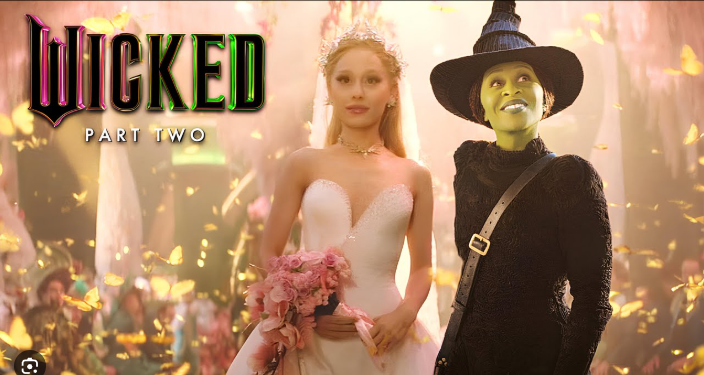
Picking up exactly where Part One left off—moments after Elphaba’s electrifying “Defying Gravity” escape from the Emerald City—Part Two wastes no time in raising the stakes. Branded as the “Wicked Witch of the West” by the manipulative Wizard (Jeff Goldblum) and his loyal enforcer, Madame Morrible (Michelle Yeoh), Elphaba goes into hiding in the shadowy Ozian forest, where she continues her fight to free the enslaved animals of Oz and expose the Wizard’s totalitarian lies. Meanwhile, Glinda is thrust into the spotlight as “Glinda the Good,” the Wizard’s public spokesperson and the face of Oz’s supposed virtue. Engaged to Fiyero (Jonathan Bailey), now captain of the Gale Force, Glinda struggles with crippling guilt—she knows the truth about the Wizard’s deception, yet she fears losing her newfound power and status if she speaks out. What follows is a sweeping, emotional journey that weaves together political intrigue, heart-wrenching betrayal, and the unshakable bond between two women torn apart by circumstance.
Chu, who proved his mastery of musical spectacle with Part One and In the Heights, leans into a darker, more introspective tone for the sequel—one that perfectly mirrors the story’s shift from youthful optimism to adult disillusionment. The film expands on the Broadway musical’s second act with new scenes, flashbacks, and two original songs from composer Stephen Schwartz, allowing for deeper character development and a more nuanced exploration of Oz’s corrupt underbelly. The opening sequence, set during the construction of the Yellow Brick Road—built by enslaved animals—sets the stage for the film’s central conflict: Elphaba’s unwavering fight for justice against a regime that preys on the vulnerable. Her daring rescue of these animals, set to a rousing reprise of “The Wizard and I,” is a powerful statement of her resolve, reminding audiences that her “wickedness” is merely a label imposed by those who fear her courage.
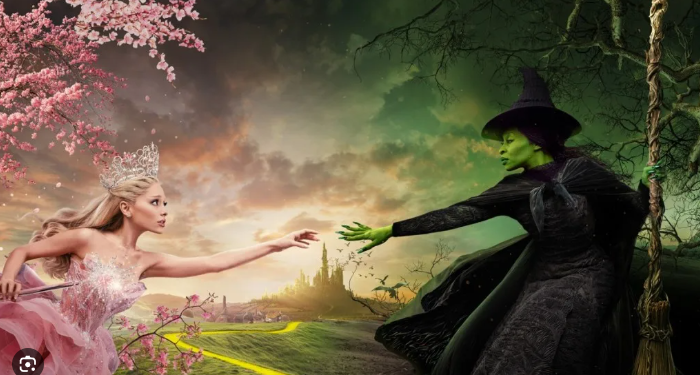
The film’s emotional core remains the fraught relationship between Elphaba and Glinda, and Erivo and Grande deliver performances that are nothing short of transcendent. Erivo, who already cemented Elphaba as one of cinema’s greatest musical heroines in Part One, deepens her portrayal here, capturing the character’s rage, grief, and quiet vulnerability. Elphaba is no longer just a defiant outcast; she is a leader burdened by the weight of her mission, haunted by the fear that her fight will cost her the only friend she’s ever had. Erivo’s vocals are nothing short of extraordinary—her rendition of the new song “No Place Like Home,” a soulful ballad about longing for connection amid chaos, is a showstopper that will leave audiences in tears. Equally impressive is Grande, who sheds Glinda’s bubbly exterior to reveal a woman torn between loyalty and ambition. Her performance of the second new song, “The Girl in the Bubble,” a poignant reflection on the loneliness of power, showcases her growth as an actress, balancing Glinda’s signature wit with raw, unfiltered emotion. The scenes between Erivo and Grande are electric—their final confrontation, set in the ruins of Kiamo Ko, is a masterclass in acting, as they lay bare their hurts, regrets, and unspoken love for one another. It is a moment of profound intimacy, made all the more powerful by the chemistry between these two powerhouse performers.
The supporting cast shines just as brightly, bringing depth and nuance to characters both familiar and reimagined. Jonathan Bailey’s Fiyero is no longer just a charming playboy; he is a man torn between his loyalty to Glinda and his growing admiration for Elphaba’s courage. His rendition of “As Long as You’re Mine,” a duet with Erivo, is a tender, passionate moment that captures the complexity of their forbidden romance. Jeff Goldblum brings his signature wit and charm to the Wizard, portraying him not as a cartoonish villain, but as a flawed, power-hungry man hiding behind a facade of benevolence. Michelle Yeoh, meanwhile, is chilling as Madame Morrible, her cold, calculating demeanor masking a deep-seated desire for control. Marissa Bode delivers a standout performance as Nessarose, Elphaba’s younger sister and now governor of Munchkinland, whose struggle with disability is reimagined with sensitivity—instead of pleading to “fix” her condition, Nessarose’s desire to walk stems from a longing to recapture the joy of dancing with Boq (Ethan Slater) at the Ozdust Ballroom. Slater, in turn, brings warmth and pathos to Boq, whose transformation into the Tin Man is a tragic reminder of the unintended consequences of magic and jealousy.
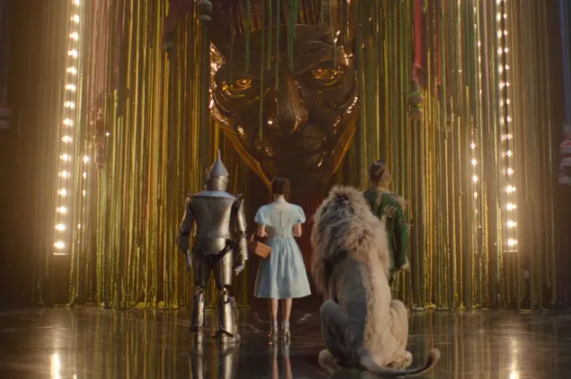
Visually, Wicked: Part Two is a feast for the eyes, building on the first film’s stunning world-building while embracing a darker, more atmospheric aesthetic. The Ozian forest is a lush, mysterious realm of twisted trees and glowing fungi, while the Emerald City shines with cold, artificial grandeur—a stark contrast to the warmth of Elphaba’s forest hideaway. The Netherfield, home to the Wizard’s secret laboratory, is a haunting, industrial space filled with caged animals and experimental machinery, highlighting the regime’s cruelty. Chu and cinematographer Alice Brooks use color masterfully: Elphaba’s emerald green skin stands out against the muted tones of the forest, while Glinda’s bubble—gift from Madame Morrible, a technological marvel designed to fool Ozians into believing she has magic—glows with a soft, pinkish hue, symbolizing her fragile facade of perfection. The visual effects are seamless, particularly in the sequences featuring flying monkeys and the transformation of Fiyero into the Scarecrow and Boq into the Tin Man. These moments are both visually stunning and emotionally resonant, never overshadowing the story’s human core.
Musically, the film is a triumph, blending beloved Broadway classics with new material that enriches the story. Schwartz’s iconic score—including “For Good,” “No Good Deed,” and “Defying Gravity”—is brought to life with lush orchestrations, while the two new songs, “No Place Like Home” and “The Girl in the Bubble,” feel seamlessly integrated into the narrative. Grande’s rendition of “Thank Goodness” is a standout, capturing Glinda’s forced optimism as she grapples with her guilt, while Erivo’s “No Good Deed” is a tour de force of emotion, showcasing her range and power. The choreography, led by Christopher Scott, is equally impressive, particularly in the ensemble numbers set in the Emerald City and the Ozdust Ballroom. The dance sequences are vibrant and dynamic, adding energy and spectacle without distracting from the story.
What sets Wicked: Part Two apart from other musical adaptations is its willingness to confront complex themes with nuance and heart. The film explores the danger of blind faith, the cost of power, and the ways in which society labels those who challenge the status quo as “wicked.” It also reimagines key moments from the Broadway musical to add depth and emotional resonance: Dorothy Gale (Bethany Weaver), though her face is never shown, plays a more prominent role than in the stage show, serving as a catalyst for the film’s climax while allowing audiences to keep their own vision of the iconic character. The film also expands on Glinda’s backstory with extended flashbacks of her childhood, showing her longing to perform real magic and her struggle to live up to the expectations of her family. These moments add layers to Glinda’s character, making her journey from superficial socialite to compassionate leader all the more compelling.
If there is a flaw in Wicked: Part Two, it is that some of the supporting characters—particularly the Cowardly Lion (voiced by Colman Domingo) and Elphaba’s childhood nanny, Dulci Bear (voiced by Sharon D. Clarke)—feel underdeveloped. Their roles are brief, and their motivations are not fully explored, leaving audiences wanting more. Additionally, the film’s third act, which culminates in Elphaba’s supposed “melting” and subsequent secret escape, feels slightly rushed, with the resolution of the Wizard’s regime happening too quickly. However, these minor shortcomings are overshadowed by the film’s emotional power and technical brilliance.
In the end, Wicked: Part Two is more than just a conclusion to a musical saga—it is a celebration of friendship, courage, and the power of defiance. It honors the spirit of the Broadway musical while expanding upon its themes and characters, creating a cinematic experience that is both nostalgic and fresh. Chu has crafted a film that will delight die-hard fans of the musical, who will appreciate the Easter eggs and faithful adaptations of their favorite moments, while also welcoming newcomers to the world of Oz. The film’s final moments—Glinda embracing her role as Oz’s leader, vowing to honor Elphaba’s legacy, and Elphaba escaping to a life of freedom with Fiyero—are both bittersweet and hopeful, a perfect end to a story about love, loss, and the courage to be true to oneself.
With its transcendent performances, stunning visuals, and unforgettable music, Wicked: Part Two cements itself as one of the greatest musical adaptations of all time. It is a film that will make you laugh, cry, and cheer—reminding you of the power of friendship and the courage to stand up for what’s right, even when the world is against you. For Cynthia Erivo and Ariana Grande, this film is a testament to their talent and versatility, showcasing their ability to bring depth and emotion to two of the most beloved characters in musical theater history. For Jon M. Chu, it is a triumph of direction, proving that he is a master of blending spectacle with heart.
Final Verdict: A stirring, spectacular conclusion to one of the most beloved stories in musical history. Wicked: Part Two is a cinematic masterpiece that honors its Broadway roots while forging its own identity, with career-defining performances, stunning visuals, and a emotional resonance that will linger long after the credits roll. It is a must-see for musical fans, fantasy lovers, and anyone who has ever felt like an outsider fighting to be heard. This is how you adapt a classic—with love, respect, and the courage to defy expectations.