Juror #2 (2026) Review: Clint Eastwood’s Quiet Masterclass in Guilt, Justice, and Moral Collapse
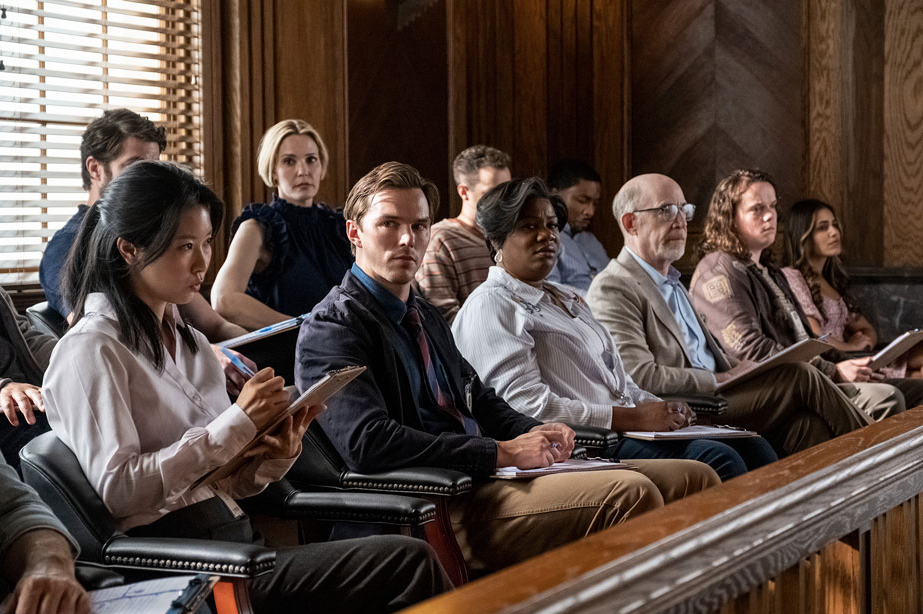
At 94 years old, Clint Eastwood has long since cemented his legacy as one of Hollywood’s greatest filmmakers—a director whose career spans six decades and explores the dark, unyielding corners of human nature: guilt, honor, justice, and the fragile line between right and wrong. With Juror #2 (2026), Eastwood delivers what may be his final, and most intimate, exploration of these themes: a taut, morally complex courtroom thriller that is equal parts gripping character study and searing indictment of the American justice system. It is a film of quiet intensity, spare in style but overwhelming in emotional weight, a masterclass in economical storytelling from a director who has lost none of his precision or power. For adult audiences craving intelligent, character-driven drama, Juror #2 is essential viewing—a film that lingers in the mind long after the credits roll, forcing viewers to confront the same devastating moral dilemma that haunts its protagonist.
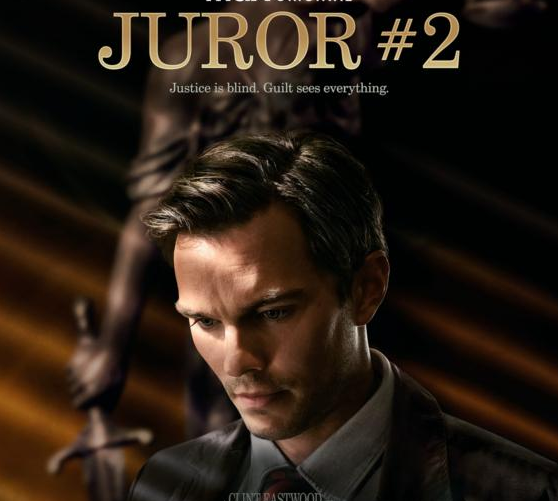
A Perfect Life, a Terrible Secret
The film centers on Justin Kemp (Nicholas Hoult), a seemingly ordinary man: a devoted husband to his pregnant wife, Allison (Zoey Deutch), a hardworking professional, and a model citizen. His life is stable, unremarkable, and safe—until he receives a jury summons for a high-profile murder trial. The case: a young woman, Kendall Carter (Francesca Eastwood), has been found dead in a creek, and a drifter named James Michael Sythe (Gabriel Basso) stands accused of her murder. From the opening moments of the trial, however, Justin’s world begins to unravel. As evidence mounts—descriptions of the crime scene, the timing of the death, the nature of the victim’s injuries—Justin is overcome by a horrifying, paralyzing realization: he is responsible for Kendall’s death.
In a flash of memory, Justin recalls the rainy night of the incident: driving home, distracted, his car struck something on the road. He stopped, saw nothing in the dark, assumed he’d hit a deer, and fled the scene. Now, sitting in the jury box, he understands the truth: he hit and killed Kendall Carter. The man on trial for her murder is innocent. What follows is a relentless, suffocating portrait of a man trapped in a nightmare of his own making. Justin faces an impossible choice: come forward, confess his crime, and destroy his family, his future, and everything he holds dear… or manipulate the jury, secure an acquittal for the innocent defendant, and carry his secret to the grave.
This premise—simple, brutal, and deeply personal—is the engine that drives Juror #2. Eastwood resists the urge to inflate the story with melodrama or unnecessary twists. Instead, he narrows his focus to Justin’s unraveling psyche, turning the jury room into a pressure cooker of guilt, fear, and moral compromise. The film’s power lies not in grand speeches or explosive set pieces, but in the small, devastating moments: Justin’s sweaty palms as he holds his juror badge, his trembling voice as he asks a seemingly innocent question, his hollow eyes as he watches the innocent man’s life hang in the balance.
A Cast at the Top of Their Game
Nicholas Hoult delivers a career-best performance as Justin Kemp, a role that demands extraordinary restraint and emotional nuance. Hoult, long known for his charismatic turns in blockbusters and indie gems alike, disappears into Justin—a man who is not a villain, but an ordinary person undone by a single, catastrophic mistake. He portrays Justin’s panic not as histrionic outbursts, but as a quiet, consuming dread; his guilt is visible in every tight smile, every avoidant glance, every forced attempt to appear normal. As Justin shifts from a passive observer to an active manipulator—deliberately sowing doubt, picking apart evidence, and becoming the jury’s lone holdout—Hoult masterfully tracks his moral erosion. We watch as a good man, motivated by love for his family, gradually becomes a liar, a coward, and a destroyer of justice. It is a haunting, deeply sympathetic turn that anchors the entire film.
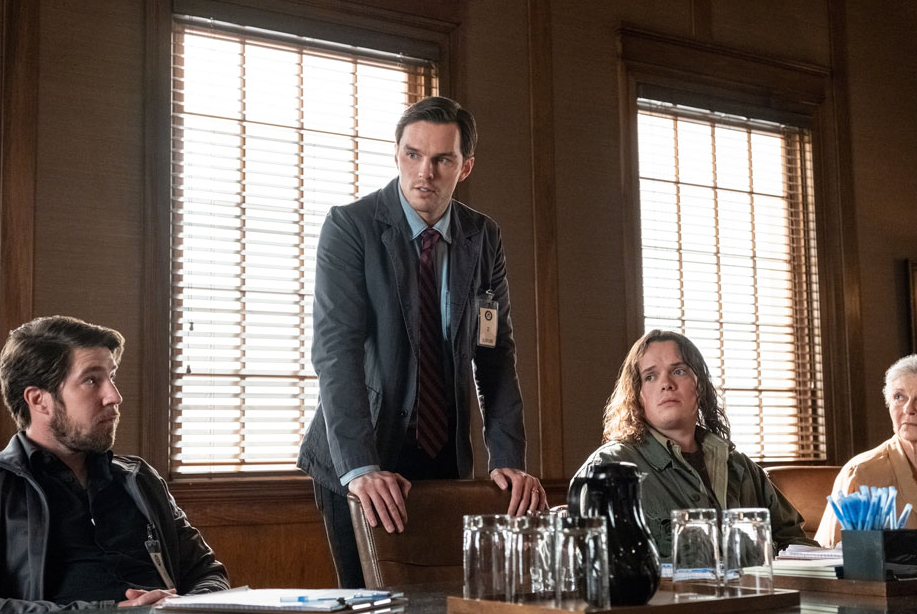
The supporting cast is equally stellar, turning a potentially one-note ensemble into a vivid tapestry of human flaw and conviction. J.K. Simmons is electrifying as Harold, a retired detective and fellow juror whose sharp intuition and no-nonsense demeanor make him Justin’s primary adversary. Simmons brings a weathered gravitas to the role; his Harold is not a hero, but a man who has seen too much of the world’s darkness to be fooled by Justin’s nervous lies. Their quiet, tense exchanges—wordless battles of wills across the jury table—are among the film’s most riveting scenes.
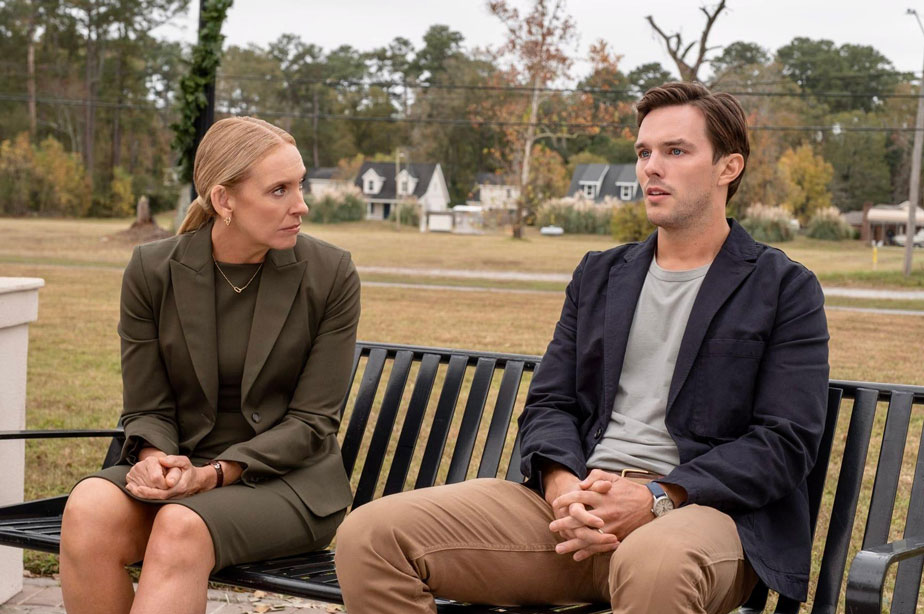
Toni Collette is formidable as Faith Killebrew, the ambitious prosecutor determined to secure a conviction. Collette avoids portraying Faith as a caricature of a ruthless lawyer; instead, she is a woman driven by a twisted sense of justice, blind to the possibility of innocence in her quest for professional victory. Her scenes, particularly her cross-examinations and her growing suspicion of Justin’s odd behavior, crackle with intelligence and menace. Zoey Deutch shines as Allison, Justin’s wife, capturing the confusion, fear, and quiet strength of a woman who senses her husband’s secret but cannot name it. The entire ensemble—including Chris Messina, Kiefer Sutherland, and Leslie Bibb as fellow jurors—feels authentic, each character representing a different facet of bias, apathy, or certainty that shapes the jury’s fractured dynamic.
Eastwood’s Directorial Mastery: Less is More
What makes Juror #2 a standout in Eastwood’s filmography is its spartan, unflinching direction. The director’s signature style—lean, efficient, and free of stylistic flourishes—serves the story perfectly. Eastwood shoots the film with a documentary-like realism: the courtroom is plain, fluorescent-lit, and unglamorous; the jury room is cramped, dull, and suffocating; the outdoor scenes are muted, overcast, and steeped in a pervasive sense of unease. There is no musical score to manipulate emotion; instead, the film relies on natural sound—the scratch of pens on paper, the hum of fluorescent lights, the shaky tremor in a character’s voice—to build tension. This minimalism is not a weakness, but the film’s greatest strength: it strips away all distraction, forcing the audience to confront the raw, unvarnished truth of Justin’s dilemma.
Eastwood, a lifelong skeptic of institutions and systems, uses the courtroom to dissect the fragility of justice. The film argues that the American legal system, for all its ideals of fairness and impartiality, is ultimately shaped by human weakness: fear, ambition, prejudice, and self-preservation. The jury is not a collection of dispassionate seekers of truth, but a group of strangers bringing their own baggage, biases, and agendas. Some are eager to condemn, eager to punish; some are apathetic, eager to finish their duty and go home; some, like Justin, are motivated by secrets that have nothing to do with the case at hand. Eastwood does not moralize or lecture; he simply observes, with a cold, clear eye, how easily justice can be derailed—not by grand corruption, but by ordinary people making ordinary, terrible choices.
The film’s pacing is deliberate, almost meditative, but never slow. Eastwood allows tension to simmer slowly, building steadily toward a climax that is both inevitable and devastating. The jury room deliberations are a masterclass in sustained suspense: as Justin fights to hold onto his “not guilty” vote, his desperation grows, his lies become more elaborate, and his fellow jurors grow increasingly frustrated and suspicious. The film’s third act—where Justin’s manipulation reaches its peak, and Harold closes in on his secret—is a tour de force of quiet, coiled tension.
Themes That Resonate: Guilt, Secrecy, and the Cost of Redemption
At its core, Juror #2 is a profound exploration of guilt and moral cowardice. Unlike typical thrillers, where the protagonist’s redemption is earned through courage and confession, Eastwood’s film offers no easy path to salvation. Justin’s choice—to protect himself and his family by letting an innocent man face the consequences of his crime—is not framed as heroic or even sympathetic. It is a tragic, selfish act that corrupts him irrevocably. The film’s genius lies in its refusal to judge Justin outright; instead, it compels us to understand him. We feel his terror, his love for his wife and unborn child, his desperate desire to cling to the life he has built. In doing so, Eastwood forces us to ask ourselves the unthinkable: What would I do?
This moral ambiguity is what elevates Juror #2 beyond a simple legal thriller into a work of profound philosophical weight. It is a film about the secrets we keep, the lies we tell to survive, and the slow, invisible death of the soul when we choose self-preservation over truth. Justin’s victory—securing the acquittal he thinks he wants—feels like a defeat. The film’s final moments, a wordless scene of Justin returning home to his wife, his face etched with permanent guilt, are devastating. He has saved his family, but he has lost himself. The ending is not happy, not hopeful, but honest—a stark reminder that some mistakes cannot be outrun, and some secrets are a life sentence.
A Fitting Final Chapter?
There is a poignancy to Juror #2 that cannot be ignored: it feels very much like a farewell from a cinematic legend. Eastwood’s career has always circled these themes—men broken by their pasts, the high cost of violence, the emptiness of false honor—and Juror #2 distills those ideas into their purest, most intimate form. It is a small film, in scope and scale, but it carries the weight of a lifetime of observation and wisdom. It is not his flashiest film, nor his most epic, but it may be his most human.
If Juror #2 is indeed Clint Eastwood’s final film, it is a masterful, dignified conclusion to one of the greatest careers in Hollywood history. It is a film for adults, about adults—about the quiet horrors of being human, about the choices that define us, and about the terrible truth that the monster we fear most is often the one looking back at us in the mirror.
For fans of thoughtful, intense drama, Juror #2 is unmissable. It is a reminder that the best thrillers are not about monsters or mysteries, but about people—and the terrible, beautiful complexity of what we are capable of when pushed to the edge.