Review: Minecraft: The Movie (2025) – A Vibrant, Imperfect Love Letter to Creativity & Connection
Adapting a cultural phenomenon as open-ended and beloved as Minecraft was always going to be a Herculean task. The 2011 sandbox game, which has sold over 300 million copies worldwide, thrives on its lack of a fixed narrative—its magic lies in the freedom to create, explore, and connect with others in a blocky, boundless world. For decades, fans wondered if a film could capture that unstructured joy without reducing it to a formulaic adventure. With Minecraft: The Movie (officially titled A Minecraft Movie), director Jared Hess (Nacho Libre, Napoleon Dynamite) delivers a vibrant, heartfelt, and occasionally messy love letter to the game’s core ethos: creativity, friendship, and the courage to build something meaningful from nothing. It is not a perfect adaptation, nor does it fully escape the pitfalls of video game-to-film translations, but it succeeds where it matters most—by honoring the spirit of the game while crafting a story that feels accessible to both die-hard fans and newcomers alike.
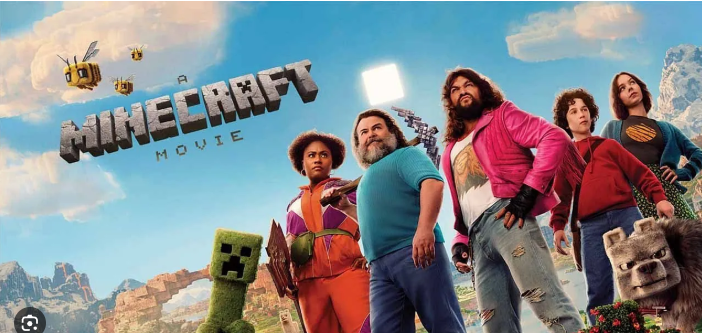
Set in both the real world and the iconic blocky realm of Minecraft’s Overworld, the film follows four unlikely heroes: Garrett “The Garbage Man” Garrison (Jason Momoa), a washed-up former arcade champion now running a struggling video game store; Natalie (Emma Myers), a kind-hearted young woman balancing college and her role as legal guardian to her younger brother; Henry (Sebastian Hansen), Natalie’s creative, anxious teen brother whose jetpack prototype is sabotaged by bullies; and Dawn (Danielle Brooks), a quirky real estate agent who runs a mobile petting zoo on the side. These four “outsiders,” each grappling with their own insecurities and unmet potential, are suddenly pulled into a glowing, mysterious portal that transports them to the Overworld—a vivid, cube-shaped landscape of rolling grasslands, towering mountains, and bubbling lava pits, where survival depends on creativity and collaboration.
Upon their arrival, they cross paths with Steve (Jack Black), a gruff but warm-hearted former door-knob salesman who has spent years stranded in the Overworld, mastering its rules and perfecting his building skills. Steve becomes their guide, teaching them to mine resources, craft tools, and build shelter—skills straight from the game that feel organic to the story rather than forced fan service. But their quest to find a way back home is derailed by a looming threat: Mal Gosha (Rachel House, voice), the tyrannical Piglin ruler of the Nether, who harbors a bitter grudge against creativity after her innovative dance was rejected by her own people. Determined to destroy the Overworld and the “weakness” of imagination it represents, Mal Gosha leads an army of Piglins, Zombies, and Creepers on a rampage, targeting the mythical “Orb of Dominance”—a relic that can bridge the gap between the Overworld and the real world, and which she plans to use to spread destruction beyond the blocky realm.
The film’s greatest strength lies in its unapologetic embrace of Minecraft’s identity. Hess and his team have crafted a visual spectacle that feels both faithful to the game and cinematically engaging. The Overworld is brought to life with a stunning blend of practical sets and CGI, with 85% of the blocky landscapes built as physical props—from the pixelated trees and cube-shaped animals to the iconic dirt huts and stone fortresses. The attention to detail is meticulous: Creepers hiss and explode in a shower of blocks, Endermen teleport with eerie silence, and Steve’s signature blue shirt and pixelated features are rendered with affection without feeling cartoonish. Oscar-winning VFX supervisor Dan Lemmon (The Jungle Book) ensures that the CGI elements blend seamlessly with the practical sets, creating a world that feels tangible and immersive, even with its intentionally blocky aesthetic. The Nether, too, is a visual triumph— a fiery, chaotic realm of lava rivers, obsidian towers, and glowing fungi that captures the game’s eerie, otherworldly vibe while adding cinematic flair.
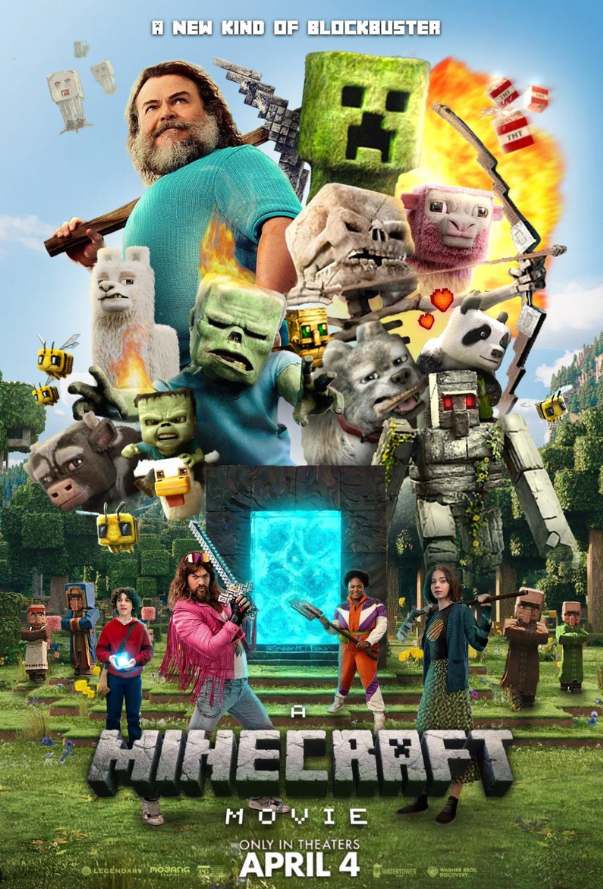
Mark Mothersbaugh’s score complements the visuals perfectly, blending upbeat, whimsical melodies with epic, orchestral swells that mirror the film’s shift from lighthearted adventure to high-stakes conflict. The soundtrack also includes playful nods to the game’s iconic sound effects—the clink of pickaxes, the hiss of Creepers, the gentle hum of a crafting table—all of which will delight long-time fans. Hess’s direction leans into the game’s playful spirit, infusing the film with his signature quirky humor: Jennifer Coolidge shines as Marlene, a bumbling vice principal who accidentally crashes her Jeep into everything in sight, while Jemaine Clement delivers a hilarious dual performance as a sleazy auctioneer and the voice of a snarky Piglin. These comedic moments keep the tone light, making the film accessible to younger audiences without alienating adults.
The cast, for the most part, embraces the film’s whimsy with enthusiasm. Jason Momoa, known for his tough-guy roles, surprises as Garrett, bringing warmth and vulnerability to a character who is equal parts gruff and goofy. His chemistry with the rest of the cast is infectious, particularly in scenes where Garrett learns to let go of his past and embrace his creativity. Jack Black is perfectly cast as Steve—he captures the character’s laid-back charm and quiet wisdom, delivering lines like “Creativity isn’t about being perfect; it’s about being brave enough to try” with genuine heart. Emma Myers, fresh off her success in Wednesday, brings depth to Natalie, portraying her as a caring, resilient young woman who learns to trust her own instincts. Sebastian Hansen, in his breakout role, shines as Henry, capturing the anxiety and passion of a young inventor struggling to believe in himself. Danielle Brooks rounds out the core cast as Dawn, bringing energy and humor to every scene she’s in, while Rachel House’s voice work as Mal Gosha is appropriately menacing, even if the character’s motivations feel underdeveloped.
Where Minecraft: The Movie stumbles is in its narrative ambition—or lack thereof. The film’s plot is straightforward to a fault, following a familiar “ragtag team saves the world” formula that feels predictable and, at times, underdeveloped. Mal Gosha, despite House’s strong performance, is a one-note villain; her backstory (rejected for her creativity) is touched on but never fully explored, making her motivations feel thin and unconvincing. The film’s third act, which culminates in a chaotic battle between the heroes and Mal Gosha’s army, feels rushed, with the resolution relying on a deus ex machina that undermines the film’s message about creativity and collaboration. As some critics have noted, the film plays it safe, choosing a predictable adventure over the open-ended creativity that defines the game. It never quite captures the “anything is possible” spirit of Minecraft, instead leaning into a linear story that feels more like a standard family adventure than a celebration of the game’s sandbox freedom.
Another point of contention is the film’s balance between fan service and accessibility. Die-hard Minecraft fans will appreciate the countless Easter eggs: the iconic “Creeper face” carved into a mountain, Steve’s pet wolf, the use of Redstone circuits to power traps, and even a cameo from a Nitwit villager (voiced by Matt Berry) who ends up in the real world. There are also two post-credits scenes—one teasing a potential sequel and another featuring a hilarious reunion between Marlene and the Nitwit—that will delight fans. However, some fans have criticized the film for simplifying the game’s core mechanics and reducing its “survival” element to a series of comedic set pieces, arguing that it feels more like a “baby version” of the game than a true homage. Non-fans, meanwhile, may find the blocky aesthetic jarring at first, and the film’s reliance on game terminology (e.g., “Overworld,” “Nether,” “Crafting Table”) could feel confusing without prior knowledge of the game.
Despite these flaws, Minecraft: The Movie succeeds in its core mission: to celebrate the game’s themes of creativity, friendship, and resilience. The film’s message—that creativity is not about perfection, but about connection and courage—is heartfelt and timely, particularly for younger audiences. It emphasizes that everyone has something to contribute, whether it’s Henry’s inventiveness, Natalie’s compassion, Dawn’s humor, or Garrett’s street smarts. In a world that often values conformity, the film’s celebration of “outsiders” and their unique gifts is a welcome reminder of the power of individuality.
The film also benefits from its refusal to take itself too seriously. Unlike many video game adaptations that try to be dark or edgy, Minecraft: The Movie embraces its whimsy, leaning into the game’s playful spirit. It’s a film that knows it’s about a blocky world where you can build a castle out of dirt or fight a Creeper with a diamond sword, and it never tries to pretend otherwise. This lighthearted approach makes the film’s emotional beats—like Henry learning to believe in himself or Steve finally finding the courage to return to the real world—feel more genuine and impactful.
From a technical standpoint, the film is a triumph. The production design, led by Oscar winner Grant Major (The Lord of the Rings), is meticulous, recreating the game’s iconic locations with stunning detail. The cinematography by Enrique Chediak (127 Hours) captures the beauty of the Overworld, from the golden glow of sunrise over blocky hills to the eerie darkness of the Nether. The action sequences are well-choreographed, particularly a tense scene where the heroes must build a bridge across a lava river while evading Piglins and Creepers, which perfectly captures the game’s mix of creativity and survival.
Critics have been divided on the film—some praise its charm and faithfulness to the game, while others criticize its predictable plot and lack of depth. User reviews are similarly mixed, with some fans hailing it as a “perfect family movie” and others lamenting its failure to capture the game’s creative spirit. At the box office, however, the film was a success, debuting as the 2025 Qingming Festival box office champion and grossing over $780 million worldwide, proving that the Minecraft IP still has massive appeal. It also earned a nomination for Best Video Game Adaptation at the 2025 TGA Awards, a testament to its success in translating the game’s essence to the big screen.
In the end, Minecraft: The Movie is a flawed but endearing adaptation. It may not capture the full scope of the game’s creativity, and its plot may be predictable, but it is filled with heart, humor, and stunning visuals that will delight fans of all ages. It is a film that understands what makes Minecraft special—not the blocks, the monsters, or the tools, but the connections we make and the things we create together. For parents looking for a fun, family-friendly adventure, for fans wanting to see their favorite game brought to life, or for anyone who appreciates a story about embracing creativity and friendship, Minecraft: The Movie is worth watching. It may not be a masterpiece, but it is a joyful celebration of the game that has brought millions of people together—and sometimes, that’s more than enough.
Final Verdict: A vibrant, heartfelt, and occasionally messy love letter to Minecraft’s core spirit. While it plays it safe narratively, its stunning visuals, charming cast, and celebration of creativity make it a fun, family-friendly adventure that will delight fans and newcomers alike. It’s not perfect, but it’s impossible not to smile along.