Return to Silent Hill (2026) Review – Obsession, Guilt, and the Fog of Redemption
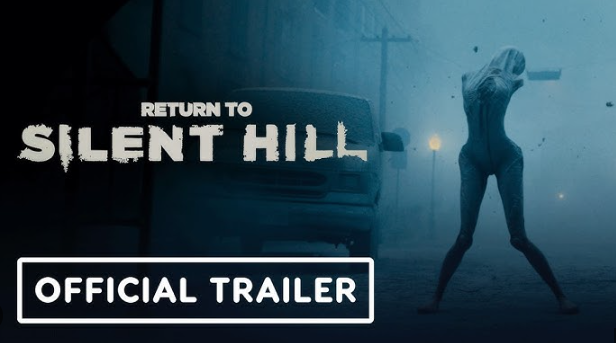
Nearly two decades after Christophe Gans revolutionized video game adaptations with Silent Hill (2006), the iconic horror franchise returns with Return to Silent Hill (2026), a gritty reboot loosely adapted from Konami’s 2001 masterpiece Sil Hill 2. For fans of the series, the promise of a faithful adaptation—paired with Gans’ signature visual flair—hung heavy. What unfolds, however, is a film that oscillates between breathtaking reverence for its source material and frustrating missteps that dilute the psychological horror at the heart of the game. It is a visually striking, emotionally uneven journey that will divide audiences: casual viewers may find it a stylish, scary diversion; diehard fans will lament its squandered potential, yet find moments of profound resonance that honor the game’s soul.
Set in the fog-shrouded, decaying town of Silent Hill, the film follows James Sunderland (Jeremy Irvine), a grief-stricken alcoholic painter grappling with depression after the loss of his girlfriend, Mary Crane (Hannah Emily Anderson). When a mysterious letter arrives—bearing Mary’s handwriting, begging him to “come back to Silent Hill”—James embarks on a desperate journey to the town he thought he’d left behind. What he finds is not a ghost town, but a labyrinthine nightmare where reality warps, monstrous creatures lurk in every shadow, and the line between past and present, sanity and delusion, blurs dangerously. As James delves deeper, he encounters familiar faces (all portrayed by Anderson, in a tour de force dual role as Mary, Maria, and Angela) and iconic foes, most notably the towering, Executioner-masked Pyramid Head (Robert Strange), a symbol of unrelenting guilt and punishment. It is a premise that leans into the game’s core: Silent Hill is not just a location, but a manifestation of the protagonist’s trauma, a place where his deepest fears and regrets are made flesh.
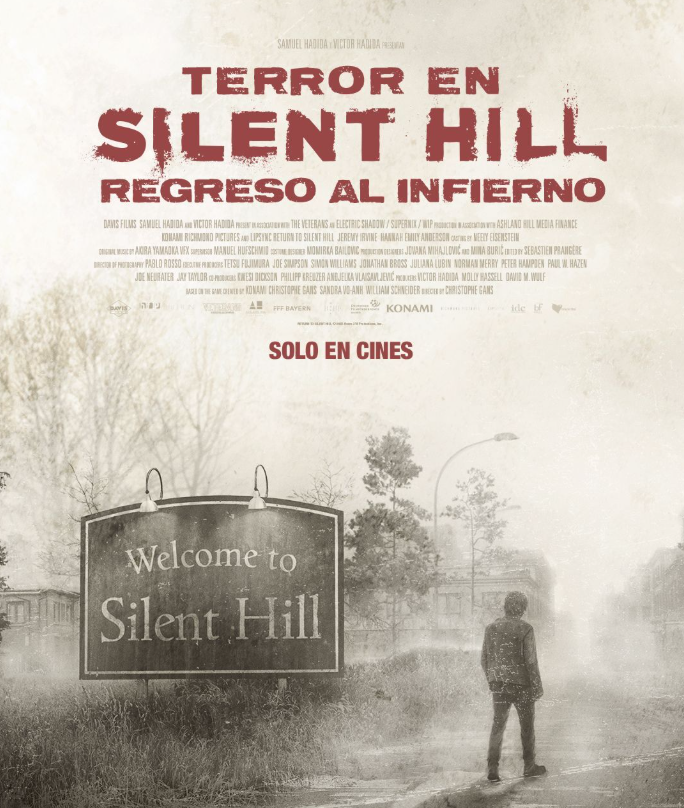
Gans’ direction is the film’s greatest strength. Working with cinematographer Fabien Wagner, he crafts a world of visceral, tactile horror that captures the game’s eerie, dreamlike atmosphere. The town itself is a character: mist clings to every surface, ash drifts through empty streets, and dilapidated buildings creak under the weight of forgotten history. The contrast between the mundane, sun-dappled memories of James and Mary’s life together and the nightmarish “Other World” of Silent Hill is stark and effective, amplifying the sense of disorientation. Gans excels at building slow-burn tension, using sound design (or its absence) and visual composition to evoke unease rather than relying on cheap jump scares. The film’s most memorable sequences are those that linger: a bathroom mirror that warps James’ reflection into a monster, a hospital corridor strewn with body parts that shifts and rearranges itself, and a final confrontation in a decaying hotel that feels like a direct homage to the game’s most iconic moments. For fans of the Silent Hill games, these moments will feel like a love letter—a chance to step into the world they know and love, rendered with care and attention to detail.
The film’s visual effects are a mixed bag. The practical effects, particularly for Pyramid Head and the game’s signature creatures (like the Armless Womxn), are gruesomely effective, with tangible, unsettling texture that CGI rarely matches. However, the film’s reported $40 million budget (a fraction of modern blockbuster horror) shows in spots: some environmental CGI looks cheap, and the transition between the “real” world and the Other World can feel jarring rather than seamless. Yet Gans compensates for this with his command of tone, balancing visceral scares with moments of quiet melancholy. The score, a reimagining of Akira Yamaoka’s iconic game music, is a triumph, blending eerie ambient textures with haunting melodies that underscore James’ emotional unraveling. It is a reminder that Silent Hill’s power has always lain in its ability to merge sound and image to create a truly immersive, psychological experience.
Where the film stumbles, however, is in its adaptation of the game’s core themes and characters. The Silent Hill 2 game is a searing exploration of grief, guilt, and redemption, centered on James’ role in Mary’s death—a secret he has spent years burying. The film softens this critical element, framing James as a sympathetic figure rather than a flawed, morally complex man consumed by his own sin. This change dilutes the film’s emotional weight: the game’s power comes from watching James confront his guilt, from the slow realization that he is his own worst enemy. In the film, James’ journey feels more like a quest to rescue Mary than a reckoning with his own actions, robbing the story of its tragic depth. This is compounded by the film’s pacing: at 103 minutes, it rushes through key emotional beats, leaving little time for James’ psyche to unravel organically. What made the game so devastating was its pacing—its ability to let the horror sink in, to make the player sit with James’ pain. The film, by contrast, moves too quickly, reducing moments of profound introspection to quick cuts and dramatic outbursts.
The character of Mary (and her doppelgängers) is another casualty of the film’s rushed adaptation. In the game, Mary, Maria, and Angela are distinct figures, each representing a different facet of James’ guilt and desire for redemption. The film merges them into a single character portrayed by Anderson, which streamlines the narrative but strips away the game’s complex exploration of identity and desire. Anderson is excellent in the role, bringing vulnerability and menace to each iteration of Mary, but the lack of distinction between the characters makes their significance feel muted. Similarly, the film’s decision to introduce a superfluous cult subplot—absent from the game—feels like a misstep, diluting the focus on James’ internal struggle and adding unnecessary complexity to an already tight narrative. The cult is underdeveloped, its motives unclear, and it ultimately adds little to the story beyond a few perfunctory action sequences.
If the film has a saving grace, it is the performance of Jeremy Irvine as James Sunderland. Irvine brings a rawness and vulnerability to the role, capturing James’ grief, confusion, and growing despair with authenticity. He is particularly effective in the film’s quieter moments, where he conveys James’ inner turmoil through subtle facial expressions and body language. In the film’s most powerful scene—a confrontation with Pyramid Head in a decaying prison—Irvine’s performance is a masterclass in emotional acting: James is not just scared, but broken, his humanity stripped away by the weight of his guilt. It is a performance that deserved a stronger film to support it, and it is a testament to Irvine’s talent that he manages to make James feel sympathetic, even when the script fails to give him the depth he deserves.
The supporting cast is solid, if underdeveloped. Evie Templeton reprises her role as Laura from the Silent Hill 2 remake, bringing a fierce, childlike intensity to the character, who serves as a mirror to James’ own guilt. Pearse Egan is effective as Eddie, a minor character from the game who meets a tragic end, but the film gives him little to do beyond serve as a plot device. Pyramid Head, meanwhile, is a menacing presence, but the film reduces his role to that of a generic villain, rather than the symbolic embodiment of James’ guilt that he is in the game. This is a missed opportunity: Pyramid Head is one of horror’s most iconic monsters, and the film fails to explore what he represents, reducing him to a jump scare machine.
For all its flaws, Return to Silent Hill is a film that is clearly made by fans, for fans. It is packed with references to the game—from iconic locations like the Brookhaven Hospital and the Silent Hill Historical Society to subtle details like James’ painting style and the design of the monsters—that will delight diehard viewers. It also captures the game’s core emotion: the pain of losing someone you love, and the desperate desire to hold on, even when it destroys you. In that sense, it succeeds. For casual horror fans, it is a stylish, well-made film that delivers the scares and atmosphere they expect from the Silent Hill brand. But for those who know and love the Silent Hill 2 game, it will feel like a missed opportunity—a film that comes so close to capturing the magic of the original, yet falls short due to unnecessary changes and a lack of courage to fully embrace its source material’s darkness.
In the end, Return to Silent Hill is a film of contradictions. It is visually stunning and emotionally resonant, yet narratively flawed and thematically shallow. It is a love letter to the Silent Hill games, yet a betrayal of their core spirit. It is a horror film that succeeds at scaring you, yet fails to truly haunt you—the mark of a film that prioritizes surface-level scares over psychological depth. Yet for all its flaws, it is a film that stays with you, if only for the moments that capture the essence of what makes Silent Hill so special. It is a reminder that some stories are too powerful to be fully tamed by film, and that the best we can hope for is a adaptation that honors their spirit, even if it doesn’t get everything right.
For fans of the Silent Hill franchise, Return to Silent Hill is worth watching—if only to see the world they love brought to life, if imperfectly, on the big screen. For horror fans more broadly, it is a solid, if unspectacular, entry in the genre that delivers on its promises of scares and atmosphere. But for anyone who has ever played Silent Hill 2, the film will be a bittersweet experience: a chance to revisit a beloved world, and a reminder of what could have been.