Review: Marty Supreme (2025) – Josh Safdie’s Chaotic Ode to Ambition, Obsession, and the Cost of Greatness
Josh Safdie’s films thrive on chaos—the unhinged energy of characters chasing impossible dreams, the tension of lives teetering on the edge, and the raw humanity that emerges when ambition collides with consequence. With Marty Supreme (2025), his first solo directorial effort since splitting with his brother Benny, Safdie delivers a tour de force that leans into everything that makes his work iconic, while carving out new emotional depth. A fictionalized portrait of ambition set against the gritty backdrop of 1950s New York and the global table tennis circuit, the film centers on Marty Mauser (Timothée Chalamet), a restless shoe store clerk with a burning desire to put American table tennis on the map—and himself at the center of it. Blending the kinetic intensity of Uncut Gems with the tender character focus of Good Time, Marty Supreme is a chaotic, exhilarating, and surprisingly poignant exploration of what happens when ambition becomes an obsession, and when the line between passion and self-destruction blurs. Garnering universal acclaim (an 89 on Metacritic), nine Academy Award nominations, and becoming A24’s highest-grossing film of all time, it’s a testament to Safdie’s singular vision—and Chalamet’s transformative talent. For website readers, it’s a must-review standout of 2025, a film that demands attention and rewards repeated viewings.
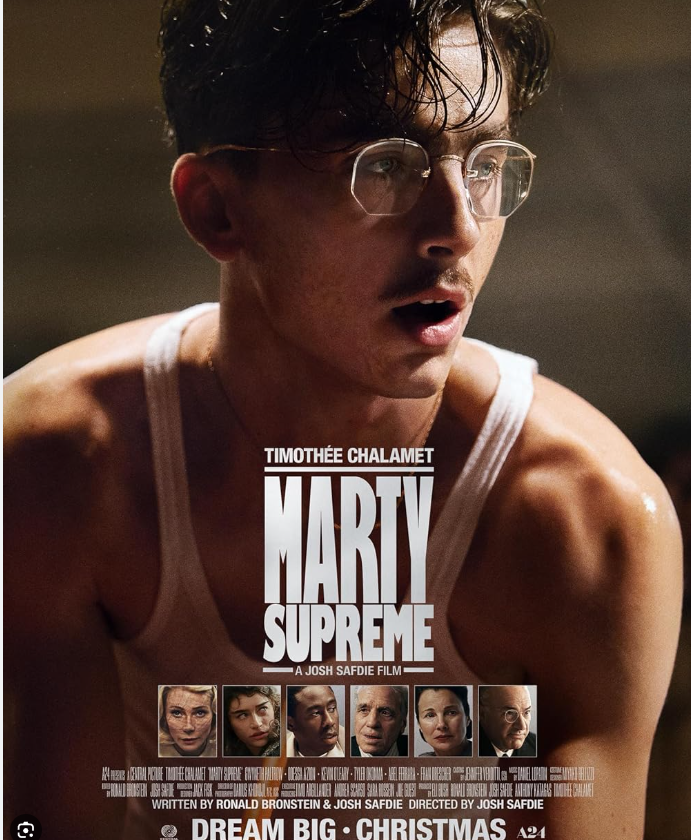
Set in 1952 New York, Marty Supreme opens with a quiet chaos that defines its protagonist: Marty Mauser, played with electrifying intensity by Chalamet, works at his uncle Murray’s (Larry Sloman) modest shoe store, where the daily grind feels like a prison for his oversized dreams. Ambition nips at his heels—he’s not just content to sell shoes; he’s determined to become a table tennis legend, to turn a sport seen as a casual pastime into a vehicle for personal glory. His life is a crowded, messy tapestry of relationships: his doting but overbearing mother Rebecca (Fran Drescher) fills their small apartment with noise and worry; his childhood friend Rachel (Odessa A’zion), married to Ira (Emory Cohen), slips away for impulsive trysts that underscore Marty’s inability to commit to anything but his dream; and his friend Dion (Luke Manley) helps him hustle “Marty Supreme” orange ping-pong balls, a small but symbolic step toward building his legacy. When Murray offers him a promotion that would lock him into a life of stability, Marty rejects it outright—he has bigger plans, even if he’s not entirely sure how to achieve them. This moment sets the film’s central tension: Marty is a man pulled between duty and desire, between the safety of the life he’s expected to live and the chaos of the life he’s determined to chase.
Safdie’s greatest triumph is his refusal to romanticize Marty’s ambition. This is not a story of a plucky underdog overcoming the odds; it’s a portrait of a man consumed by his own hunger, willing to cut corners, manipulate others, and risk everything to get what he wants. To fund a life-changing trip to London for the British Open—his chance to prove himself against reigning champion Béla Kletzki (Géza Röhrig)—Marty needs $700, a sum he doesn’t have. When Murray is away, he pressures his coworker Lloyd (Ralph Colucci) to hand over the store’s money, going so far as to threaten him with a gun. In a moment of calculated mercy (or self-preservation), he convinces Lloyd to lie to Murray, claiming the store was robbed—a choice that haunts Marty even as it propels him toward his dream. Safdie, working with longtime collaborator Ronald Bronstein on the script, fills every scene with this kind of moral ambiguity, never letting Marty off the hook for his mistakes while making it impossible not to root for his passion. The film is not a moral fable about sportsmanship; it’s a exploration of ambition as a living, breathing necessity—something Marty must manifest into existence, no matter the cost.
Chalamet’s performance is nothing short of transformative—easily the best of his career, and one that earned him a Golden Globe and Critics’ Choice Award for Best Actor, plus an Oscar nomination. He embodies Marty’s restlessness with every twitch, every rapid-fire line delivery, every flicker of doubt beneath his cocky exterior. There’s a physicality to his performance: the way he holds a ping-pong paddle like an extension of his hand, the slouch of his shoulders when he’s stuck in the shoe store, the fire in his eyes when he steps onto the court. Chalamet doesn’t just play Marty—he becomes him, capturing the character’s contradictions: he’s selfish yet vulnerable, reckless yet calculating, charming yet unlikable. In London, when he faces off against Kletzki, Chalamet’s performance reaches a fever pitch—his body tensing with every shot, his face contorting with frustration and determination, his voice cracking when he finally wins. It’s a masterclass in physical and emotional acting, a reminder of why Chalamet is one of the most talented actors of his generation. Equally impressive is Odessa A’zion as Rachel, who brings depth to a character that could have easily been reduced to a love interest. Her scenes with Chalamet are electric, capturing the complicated mix of affection and resentment that defines their relationship—Rachel is drawn to Marty’s passion, but exhausted by his inability to prioritize anyone but himself. When she reveals she’s eight months pregnant, A’zion’s performance is raw and tender, adding urgency to Marty’s already frayed plans.

The supporting cast is equally stellar, each actor bringing nuance to their roles and adding layers to the film’s chaotic world. Gwyneth Paltrow shines as Kay Stone, a former silver screen star who becomes Marty’s glamorous mentor and potential backer. Paltrow brings a quiet sophistication to Kay, masking a hint of loneliness and regret—she sees in Marty the passion she once had, and she’s willing to help him, even if it means getting tangled in his mess. Her scenes with Chalamet are a highlight, blending mentorship and romance in a way that feels both genuine and dangerous. Tyler, the Creator, in a rare acting role as Marty’s fellow ping-pong player Wally, brings his signature wit and laid-back energy, providing much-needed comic relief while also grounding the film in authenticity. His scenes with Chalamet—hustling through low-rent tournaments to scrape together cash—are some of the film’s most heartfelt, capturing the bond between two dreamers just trying to make it. Larry Sloman is perfect as Murray, Marty’s uncle and boss, balancing gruffness with genuine affection—he’s tough on Marty, but he’s also the only one who sees his potential. Even Kevin O’Leary, in his feature film debut, delivers a memorable performance as Milton Rockwell, a ruthless businessman who becomes entangled in Marty’s world—he plays a meaner version of his public persona, and he nails it, bringing a cold confidence that contrasts sharply with Marty’s chaotic energy.
Visually, Marty Supreme is a love letter to 1950s New York and the global ping-pong circuit, thanks to cinematographer Darius Khondji’s meticulous work. Safdie and Khondji adopt a gritty, documentary-like style, with handheld cameras that follow Marty through crowded apartments, smoky bars, and tense ping-pong matches. The color palette is rich and saturated—warm oranges (echoing the “Marty Supreme” ping-pong balls) contrast with the gray grittiness of New York’s streets, while London’s rain-soaked cobblestones and opulent hotels provide a stark contrast to Marty’s humble beginnings. Khondji’s camera work during the ping-pong scenes is particularly impressive—he captures the speed and intensity of the sport, using close-ups of Marty’s hands, the flick of the paddle, and the spin of the ball to make every match feel like a life-or-death struggle. Production designers Jack Fisk and Adam Willis have crafted a meticulously detailed world, from the cluttered shoe store to the cramped apartment Marty shares with his mother, to the grandeur of London’s Wembley Arena. Every prop, every piece of clothing, every sign feels authentic to the 1950s, immersing viewers in Marty’s world and making his journey feel all the more real.
Musically, the film is elevated by Daniel Lopatin’s (Oneohtrix Point Never) score—a perfect blend of neoclassical orchestration, synth-driven soundscapes, and 1980s hardware that mirrors Marty’s chaotic energy and emotional arc. Lopatin, who previously collaborated with the Safdie brothers on Good Time and Uncut Gems, brings his signature experimental style to the film, creating a score that is both tense and tender, futuristic yet nostalgic. The soundtrack also includes licensed tracks from artists like Tears for Fears (“Everybody Wants to Rule the World”), New Order, and Fats Domino, which punctuate key moments in the narrative—whether it’s a bouncy jazz tune playing over a hustle or a mournful synth melody underscoring a moment of regret. Lopatin’s score and the licensed tracks work together seamlessly, enhancing the film’s mood and adding depth to Marty’s journey. The sound design is equally meticulous: the crack of a ping-pong ball, the hum of a crowded room, the distant honk of a New York taxi—all blend to create a world that feels both hyper-stylized and eerily authentic.
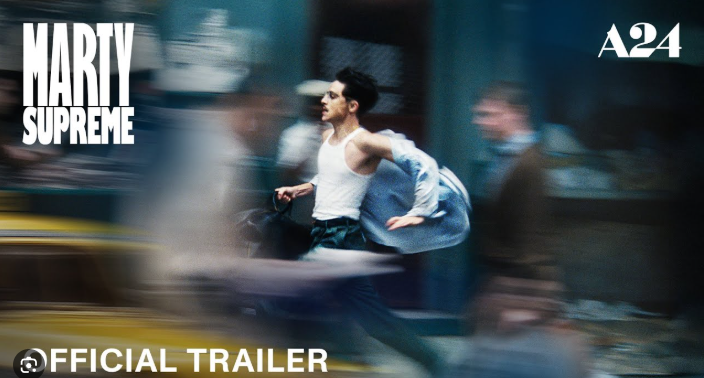
What sets Marty Supreme apart from other sports dramas is its unflinching focus on character over spectacle. Safdie and Bronstein have written a script that is sharp, layered, and filled with dialogue that crackles with wit and authenticity—they even created backstories for every character, no matter how small, which shines through in every scene. The film explores themes of legacy, duty, and the cost of ambition, asking difficult questions: What does it mean to be great? Is ambition worth sacrificing the people we love? Can we ever escape the mistakes of our past? Marty’s journey is not a linear one—he wins, he loses, he makes terrible choices, he tries to make amends, and he keeps going, even when everything falls apart. The film’s third act, which sees Marty return to New York to face the consequences of his actions—from the stolen money to Rachel’s pregnancy to a chaotic incident involving Wally’s bathtub that injures Ezra Mishkin (Abel Ferrara)—is a masterclass in tension and emotional payoff. Safdie doesn’t give Marty an easy redemption; instead, he forces him to confront the mess he’s made, and to decide what kind of person he wants to be.
If there is a flaw in Marty Supreme, it’s that its chaotic pace can occasionally feel overwhelming. The film is packed with characters and subplots—from Marty’s hustle with Dion to Kay’s complicated past to Wally’s own struggles—and at times, some of these threads feel underdeveloped. Additionally, the film’s ending, which leaves Marty’s future open-ended, may frustrate viewers looking for a neat resolution. But these minor shortcomings are overshadowed by the film’s emotional power and technical brilliance. Safdie’s direction is confident and assured, balancing chaos with heart, and never losing sight of the human story at the center of the madness.
Beyond its narrative and performances, Marty Supreme also made waves with its innovative marketing campaign—spearheaded by Chalamet himself. The actor posted a meta Zoom call with A24’s marketing team, pitching ridiculous promotional ideas (including a bright orange blimp emblazoned with “Marty Supreme”) that were praised for their dry humor and satire of corporate culture. The blimp became a real promotional tool, flying across the U.S., and Chalamet even designed a Google Easter egg and performed a stunt on top of Las Vegas’ Sphere to promote the film. This marketing genius only added to the film’s buzz, making it one of the most talked-about releases of 2025—and rightfully so. It’s a film that transcends the sports drama genre, becoming a cultural touchstone about ambition, identity, and the relentless pursuit of greatness.
In the end, Marty Supreme is a triumph—a chaotic, exhilarating, and deeply human film that showcases Josh Safdie’s singular vision and Timothée Chalamet’s transformative talent. It’s a film that celebrates ambition while unflinchingly showing its cost, that finds heart in chaos, and that reminds us that greatness is never easy—and rarely clean. For website readers, it’s a must-see film of 2025, one that will spark conversation and linger in the mind long after the credits roll. Whether you’re a fan of Safdie’s previous work, a Chalamet devotee, or just someone who loves a compelling character study, Marty Supreme delivers on every level. It’s A24’s highest-grossing film for a reason—it’s bold, it’s unapologetic, and it’s unforgettable.
Final Verdict: A chaotic, emotional tour de force, Marty Supreme is Josh Safdie at his best and Timothée Chalamet’s finest performance to date. With its gritty visuals, stellar ensemble cast, and sharp exploration of ambition and legacy, it’s a film that transcends the sports drama genre to become a modern classic. While its chaotic pace and open-ended ending may not be for everyone, it’s a compelling, meticulously crafted work that cements Safdie’s status as one of cinema’s most visionary directors. A must-review, must-see film for 2025.