Project Hail Mary (2026) Review: A Warm, Wondrous Ode to Science, Friendship, and Hope
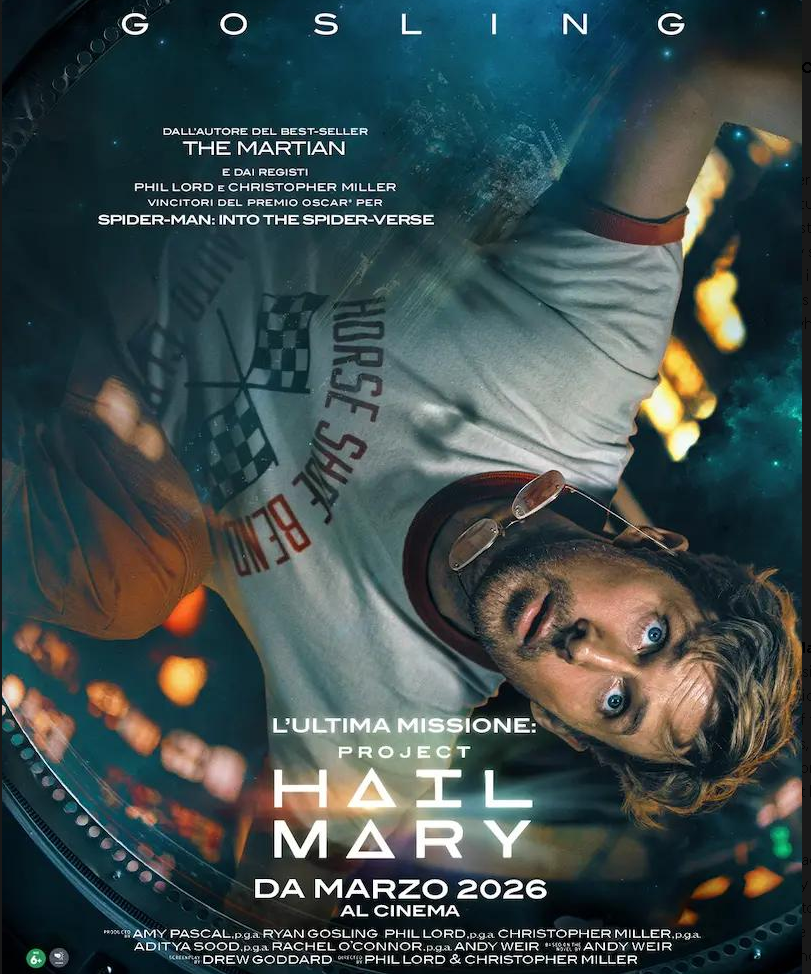
In an era where science fiction often leans into dystopian despair, cosmic horror, or bombastic superhero spectacle, Project Hail Mary (2026) arrives as a refreshing, radiant antidote—a film that celebrates curiosity, ingenuity, and the unbreakable bonds of friendship across the stars. Directed by Phil Lord and Christopher Miller (The Lego Movie, Spider-Man: Into the Spider-Verse), adapted from Andy Weir’s 2021 novel by screenwriter Drew Goddard (The Martian, Arrival), and led by a career-best Ryan Gosling, this is a big-hearted, intellectually playful, and deeply emotional space adventure that balances hard science with genuine warmth. It is not just one of the best sci-fi films in years; it is a universal story about finding purpose, connection, and hope when all seems lost—a cinematic triumph that will make you laugh, gasp, and wipe away more than a few tears.
A Man, a Mission, and a Memory Lost
The film opens in disorienting fashion: Dr. Ryland Grace (Ryan Gosling) awakens aboard the Hail Mary, a cramped, utilitarian interstellar spacecraft, light-years from Earth. He is suffering from severe amnesia—his name, his mission, even the faces of his loved ones are gone. All he has are his instincts, his rusted scientific knowledge, and a ship full of dead crewmates. As he slowly pieces his identity back together through a series of fragmented flashbacks, Grace realizes his catastrophic predicament: the Sun is being consumed by a mysterious, space-borne microorganism dubbed the “Astrophage,” which is rapidly draining its energy and dooming all life on Earth. Grace, a former molecular biologist turned disillusioned middle-school science teacher, was the last hope—a lone astronaut sent to the Tau Ceti system to find a cure or a way to stop the alien plague.
What begins as a solitary tale of survival quickly evolves into something far more extraordinary. Grace soon discovers he is not alone. He encounters Rocky (voiced and performed via animatronic puppetry by James Ortiz), a highly intelligent, spider-like alien from the planet Erid, who is on an identical, desperate mission to save his own dying star. Rocky’s species, the Eridians, are crystalline, eight-limbed beings who communicate through a complex series of clicks, chirps, and color shifts. What follows is the heart of the film: an unlikely, tender, and often hilarious friendship between two beings who share nothing but their intelligence, their isolation, and a common enemy. Together, this odd cosmic duo must overcome language barriers, cultural differences, and near-insurmountable scientific challenges to save both their civilizations.

Ryan Gosling: Perfect as the Everyman Hero
Ryan Gosling delivers a masterful, utterly charming performance as Ryland Grace, a role that feels tailor-made for his unique blend of dry wit, vulnerability, and everyman likability. Grace is no heroic astronaut—he is a sarcastic, self-deprecating, slightly bumbling teacher who is as scared and confused as anyone would be in his situation. Gosling excels at portraying Grace’s slow transformation: from a disoriented, amnesiac survivor to a brilliant, determined problem-solver, and finally to a loyal friend willing to sacrifice everything for a being he barely understands.
His chemistry with the CGI/practical-effects creation Rocky is nothing short of magical. Given that Gosling was often acting against an empty space or a rudimentary puppet, the emotional authenticity he brings to their interactions is astounding. Their scenes—fumbling to learn each other’s languages, celebrating small scientific breakthroughs, or sharing quiet moments of existential fear—are the film’s emotional core. Gosling’s wide-eyed wonder and genuine warmth make Rocky feel like a living, breathing character, not just a visual effect.
Rocky: A Cinematic Alien Masterpiece
Visually and emotionally, Rocky is a triumph of modern filmmaking. Eschewing the typical humanoid tropes of movie aliens, Rocky is a truly alien design: a towering, crystalline, spider-like creature with multiple glowing eyes and skittering limbs. Brought to life through a seamless blend of sophisticated animatronic puppetry (operated by a team of five “Rockyteers”) and subtle CGI enhancements, Rocky feels tactile and real.
The character’s voice, provided by James Ortiz, is a marvel of sound design—a symphony of clicks, trills, and electronic tones that is translated into English via a deadpan, computerized voice. This deadpan delivery creates endless comedic gold, as Rocky’s literal, unfiltered perspective contrasts hilariously with Grace’s sarcastic human humor. Yet, beneath the laughs, Ortiz imbues Rocky with profound depth: curiosity, loyalty, fear, and a quiet nobility that makes him one of the most endearing cinematic aliens since E.T.. Rocky is not just a sidekick; he is a fully realized character, and his bond with Grace is the film’s beating heart.
Lord & Miller: Balancing Science, Humor, and Heart
Phil Lord and Christopher Miller, known for their anarchic comedies and innovative animation, make a stunning transition to big-budget live-action sci-fi without sacrificing their signature style. They direct Project Hail Mary with a light, confident touch, perfectly balancing three crucial elements:
- Hard Science Accessibility: The film is packed with complex concepts—astrophysics, exobiology, thermodynamics, interstellar travel—but Lord, Miller, and Goddard present them with remarkable clarity. Like The Martian, the science is not dumbed down; it’s explained with grace and humor, often through Grace’s internal monologues or his patient lessons to Rocky. The film treats its audience as intelligent, inviting us to share in the joy of problem-solving.
- Genuine, Character-Driven Humor: The comedy in Project Hail Mary is organic, arising from the characters’ personalities and their absurd predicament, not from forced jokes. Grace’s sarcastic narration, Rocky’s innocent literalism, and the sheer fish-out-of-water absurdity of their situation provide a constant stream of warm, genuine laughs that never undercut the story’s stakes.
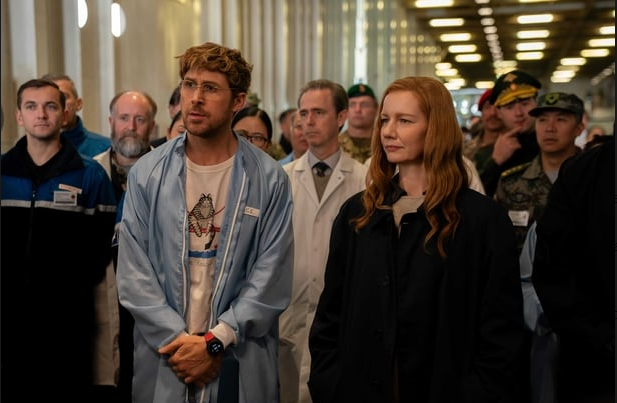
- Emotional Resonance: For all its humor and science, the film is deeply moving. Lord and Miller excel at grounding the cosmic stakes in intimate, human (and alien) emotion. The flashbacks to Earth, featuring Sandra Hüller’s stern, relentless project director Eva Stratt, effectively establish the global desperation and Grace’s personal journey from cynic to savior. Hüller, fresh off her Oscar win, brings a formidable, no-nonsense gravitas to her role, creating a compelling counterpoint to Gosling’s laid-back Grace.
Visual Splendor and Audacious Optimism
Cinematographer Barry Peterson crafts a visually stunning film. The Hail Mary is a claustrophobic, believably gritty space capsule, while the wide shots of interstellar space, the binary star system, and the alien planetscapes are breathtaking in their scope and beauty. The visual effects, particularly the Astrophage plague and Rocky’s design, are top-tier, blending seamlessly with the practical sets.
Daniel Pemberton’s score is another highlight, shifting between playful, bouncy melodies during the scientific sequences and soaring, emotional orchestral swells during the film’s most heartfelt moments. It perfectly complements the film’s tone—one of relentless, almost radical optimism.
In a genre often defined by bleakness, Project Hail Mary is unapologetically hopeful. It argues that intelligence, kindness, and cooperation—not conflict or fear—are the keys to survival. It posits that even the most isolated, ordinary person can achieve the extraordinary, and that friendship can bloom in the most unlikely places, even between species separated by billions of miles of empty space. This optimism is not naive; it is earned through the characters’ struggles, sacrifices, and unwavering determination.
A Minor Caveat: Pacing and Familiarity
If the film has any flaws, they are minor. At 156 minutes, it does feel slightly overlong, particularly in the first act as Grace’s amnesia slowly lifts. Some of the Earth-bound flashbacks, while necessary for context, can feel less engaging than the dynamic space-bound adventure. Furthermore, the film’s basic “last hope to save Earth” structure will feel familiar to anyone who has seen Interstellar, Ad Astra, or The Martian.
However, these are quibbles. Project Hail Mary transcends its familiar trappings through the sheer strength of its characters, its unique central relationship, and its unwavering belief in the goodness of intelligent life.
Conclusion: A Cinematic “Hail Mary” That Succeeds
Project Hail Mary is more than just a great sci-fi adventure; it is a vital, life-affirming film for our times. It reminds us of the power of curiosity, the joy of discovery, and the profound importance of connection. Led by a perfect Ryan Gosling and featuring an unforgettable, instantly iconic character in Rocky, it is a film that appeals to all ages—entertaining for casual viewers, intellectually stimulating for sci-fi fans, and deeply moving for anyone with a heart.
For Lord and Miller, it is a triumphant confirmation of their versatility as filmmakers. For Gosling, it is another iconic role to add to his distinguished filmography. For audiences, it is a rare cinematic experience: a big-budget blockbuster that is smart, kind, and utterly uplifting.
In a year filled with dark, gritty blockbusters, Project Hail Mary shines like a star in the dark—a warm, wondrous, and deeply human story that proves the best journeys in space are not just about saving civilizations, but about finding friends along the way. It is, without a doubt, one of the best films of 2026.