28 Years Later: The Bone Temple (2026) Review – Humanity’s Darkest Sacrifice in a Post-Rage World
Twenty-four years after Danny Boyle redefined zombie cinema with 28 Days Later (2002), the landmark British horror franchise returns with 28 Years Later: The Bone Temple (2026), the second installment in a bold new trilogy directed by Nia DaCosta (Candyman, The Marvels) and written by Alex Garland. Far from a lazy nostalgia trip or a generic gorefest, this film elevates the series by shifting its core conflict: the infected are no longer the greatest threat—humanity itself is. Where the original focused on raw survival against a feral viral plague, The Bone Temple dissects moral decay, cult fanaticism, and the fragile line between science and faith in a world that has long lost its soul. It is a haunting, visually striking, and thematically rich horror epic that proves the 28 Years saga remains vital, provocative, and deeply unsettling.
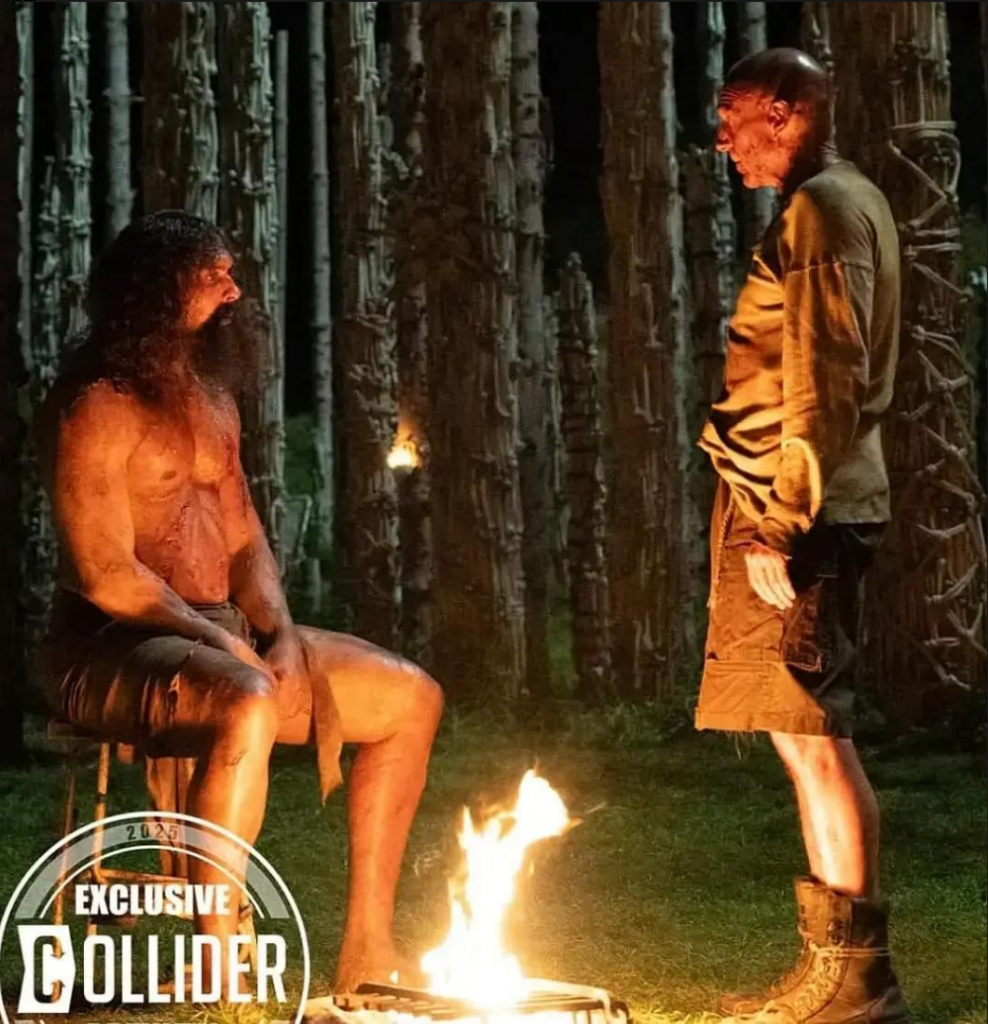
Set nearly three decades after the initial Rage virus outbreak, Britain remains a quarantined wasteland. The infected—once sprinting, flesh-ripping nightmares—have dwindled, evolving into slower, more predictable threats, while scattered survivors cling to fractured existences. The film follows two parallel narratives that collide with devastating consequences. The first centers on Dr. Ian Kelson (Ralph Fiennes), a reclusive, guilt-ridden physician who lives in a haunting, skeletal monument he calls the Bone Temple—a vast structure built from the cleaned bones of pandemic victims. Kelson, his skin stained dark with iodine to repel the virus, is not merely a grieving archivist; he is a man obsessed with redemption. He secretly tends to Samson (Chi Lewis-Parry), an “Alpha Infected”—a larger, more intelligent strain of the virus carrier—who returns repeatedly to Kelson’s sanctuary, seemingly craving the sedative darts the doctor fires to calm its rage. What begins as a cautious, dangerous experiment evolves into a profound, wordless bond: Kelson sees not a monster, but a being suffering, clinging to fragments of humanity, and he dares to believe he can cure it. This quiet, tender storyline—equal parts somber and hopeful—anchors the film’s emotional core, a stark meditation on compassion in a world devoid of mercy.
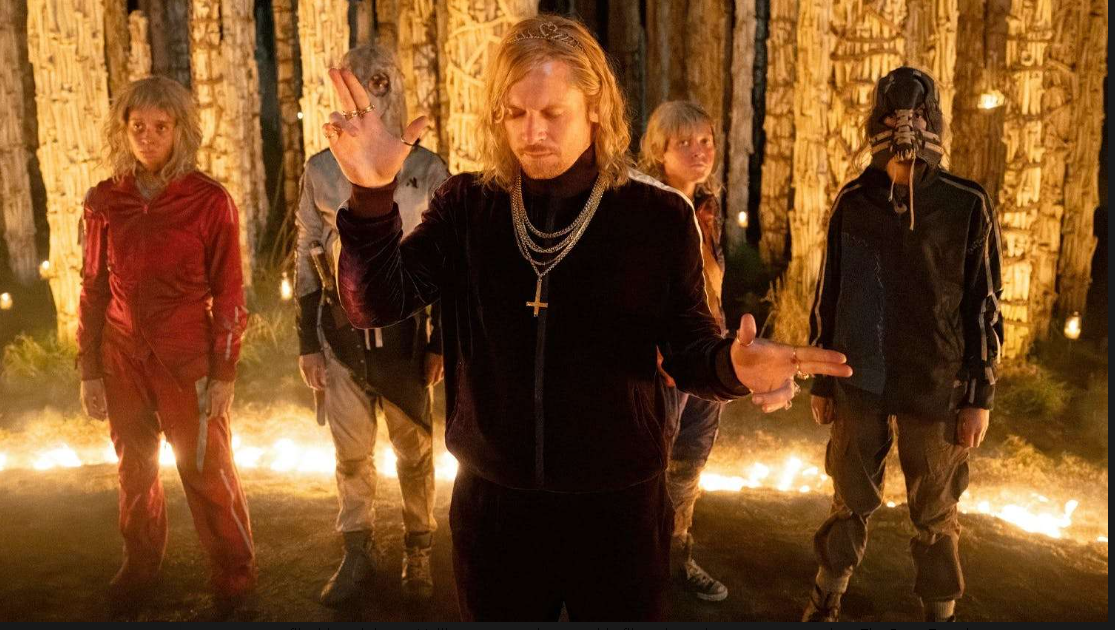
The second narrative is pure, unadulterated nightmare. Young survivor Spike (Alfie Williams), the protagonist of the 2025 prequel 28 Years Later, is kidnapped and indoctrinated into a sadistic cult led by the charismatic, deranged Sir Lord Jimmy Crystal (Jack O’Connell). Jimmy and his followers—all forced to rename themselves “Jimmy,” clad in matching tracksuits and golden wigs—roam the countryside, not to survive, but to inflict suffering. They are not infected; they are evil by choice. Jimmy, a Satanist who claims to hear the voice of his “father” (Satan), frames his brutality as a holy crusade, preying on the vulnerable and traumatized to swell his ranks. His cult is a searing critique of authoritarianism and religious fanaticism: in the absence of law and order, a twisted ideology fills the void, turning desperate people into willing executioners. O’Connell delivers a career-defining performance, balancing magnetic charm with unhinged violence; Jimmy is one of the most terrifying human villains in recent horror—more monstrous than any zombie, because his cruelty is deliberate. Spike’s struggle to resist Jimmy’s influence, protected only by a sympathetic fellow cult member (Erin Kellyman), is a harrowing study of innocence corrupted by fear and coercion.
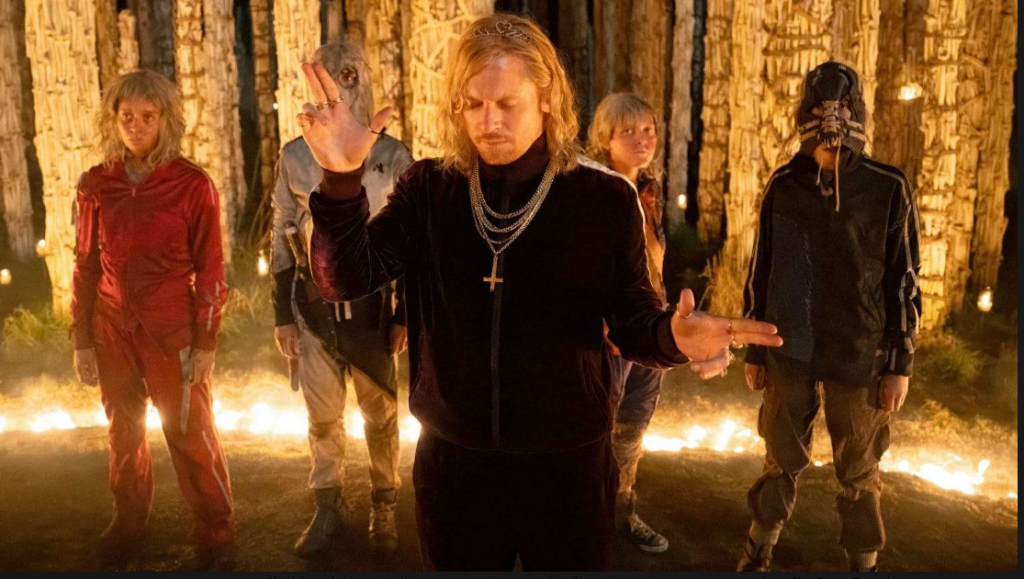
DaCosta’s direction is masterful, distinguishing The Bone Temple from its predecessors while honoring the franchise’s gritty, visceral identity. Working with cinematographer by Fabian Wagner, she crafts a world of stark, oppressive beauty: the mist-shrouded, desolate English landscapes; the warm, amber glow of Jimmy’s campfires contrasting with the cold, bone-white corridors of the Temple; the sickly, neon hues of violent, chaotic set pieces. The film’s pacing is deliberate, allowing tension to simmer slowly before erupting into bursts of shocking, unflinching violence. Unlike many modern zombie films that rely on non-stop action, The Bone Temple understands that true horror lies in anticipation and in the darkness of the human heart. The Rage-infected are still present—brutal, fast, and lethal—but they are now background noise, a constant environmental hazard, making the evil deeds of Jimmy’s cult feel even more repugnant.
Thematically, the film is a dense exploration of profound ideas. At its heart is the clash between science and faith, two systems humans use to find meaning in chaos. Kelson represents rationality and empirical hope: he uses medicine, observation, and empathy to fight the virus, seeing Samson as a patient, not a beast. His Bone Temple is a monument to remembrance and scientific inquiry, a rejection of despair. Jimmy, by contrast, represents blind, violent faith: he uses religion as a tool for control, twisting spirituality into justification for rape, murder, and torture. The film refuses to paint this as a simple “good vs. evil” binary; both men are driven by trauma and loneliness. Kelson is haunted by the lives he couldn’t save, while Jimmy’s sadism stems from childhood trauma of watching his family be torn apart by the infected. DaCosta asks: when civilization collapses, what do we become? Do we cling to our humanity, or do we surrender to the darkest versions of ourselves?
This question is crystallized in the film’s electrifying third act, when Jimmy’s cult discovers the Bone Temple. Convinced Kelson is the physical embodiment of “Old Nick” (Satan), the voice Jimmy claims to follow, the cult leader forces the doctor to participate in a grotesque charade: pretend to be the Devil to validate Jimmy’s divine authority. What follows is a scene of surreal, nightmarish power—Kelson, a man of science, must embrace the role of a dark deity to survive, blurring the very lines he has spent his life defending. The climax is a devastating collision of the two storylines: a battle for the soul of the Bone Temple, for Spike’s freedom, and for the last flicker of human decency. Without spoilers, the conclusion is tragic, brutal, and deeply moving, offering no easy victories but a glimmer of resilience. It reinforces the film’s central thesis: the Rage virus did not destroy humanity—we were perfectly capable of destroying ourselves.
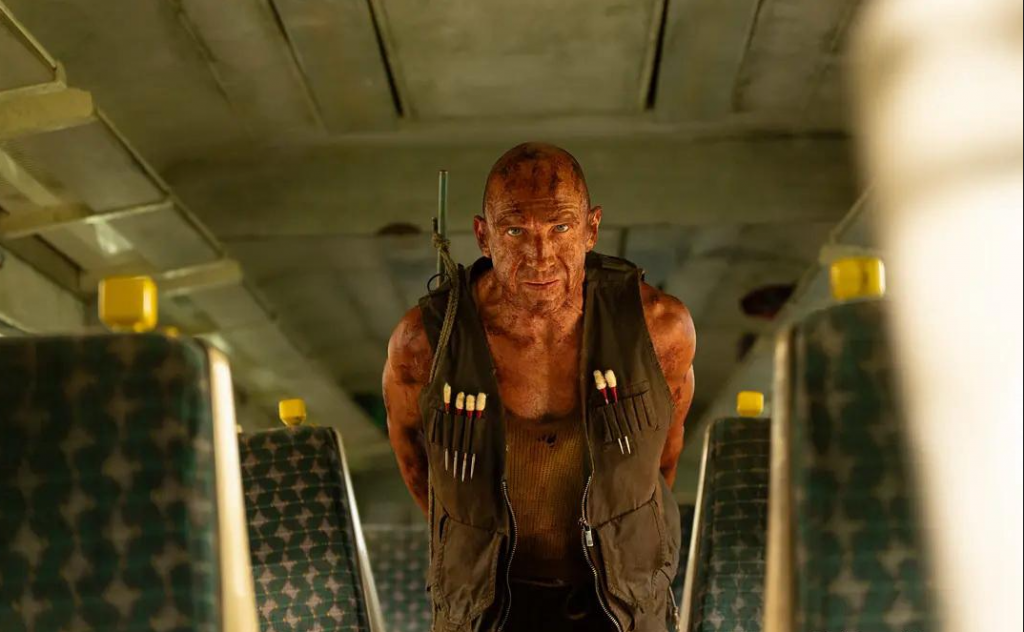
Performances across the board are exceptional. Ralph Fiennes is mesmerizing as Kelson, a man worn thin by grief but unbroken in his kindness. His quiet scenes with Samson—wordless, loaded with unspoken emotion—are among the film’s most memorable, showcasing Fiennes’ ability to convey profound depth with a glance or a gesture. Jack O’Connell is equally brilliant, making Jimmy terrifyingly charismatic; you understand why people follow him, even as you recoil from his actions. Young Alfie Williams grounds the film as Spike, capturing the terror and confusion of a child forced to grow up too fast in a world of monsters. The supporting cast, including Erin Kellyman and Chi Lewis-Parry, bring nuance to roles that could have been one-note, adding layers of humanity to a story steeped in horror.
If The Bone Temple has a flaw, it is that it demands familiarity with the 2025 28 Years Later to fully grasp character motivations and backstories. It is very much a middle chapter in a trilogy, designed to build toward a final conclusion. Some viewers may also lament the reduced screen time for the traditional infected, but this choice is precisely what makes the film feel fresh and essential. By shifting focus to human cruelty, DaCosta and Garland ensure the franchise does not repeat itself but evolves, commenting on contemporary fears of authoritarianism, misinformation, and moral collapse.
In the end, 28 Years Later: The Bone Temple is far more than a horror sequel. It is a powerful, unflinching examination of what it means to be human when all hope is lost. It asks whether compassion can survive in a world ruled by fear, whether science can triumph over fanaticism, and whether we can ever redeem ourselves after committing unspeakable acts. With stunning direction, career-best performances, and themes that resonate far beyond the screen, it stands as one of the best horror films of 2026 and a high point in the beloved 28 Days Later saga. For fans of intelligent, character-driven horror, this is essential viewing—a bone-chilling reminder that in the apocalypse, the scariest monsters are the ones that look just like us.