Review: The Naked Gun (2025) – A Gloriously Absurd Reboot That Honors the Franchise’s Legacy
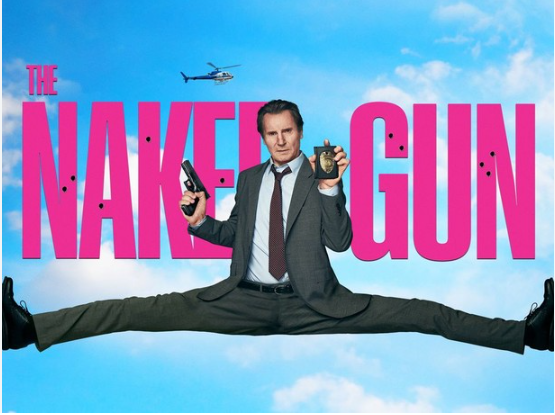
For over three decades, the Naked Gun franchise has stood as a cornerstone of slapstick comedy—a chaotic, unapologetic celebration of absurdity that turned dramatic actor Leslie Nielsen into a comedic icon. When news of a 2025 reboot surfaced, skepticism ran high: how could any film capture the magic of Nielsen’s deadpan delivery and the Zucker-Abrahams-Zucker (ZAZ) team’s rapid-fire gags? Enter Akiva Schaffer, director ofPopstar: Never Stop Never Stopping and a master of irreverent humor, who has crafted a reboot that honors the franchise’s legacy while injecting fresh energy into its beloved formula. Starring Liam Neeson as Frank Drebin Jr.—the son of Nielsen’s bumbling detective—the 2025 Naked Gun is a gloriously silly, joke-a-minute romp that delivers exactly what fans crave: over-the-top sight gags, nonsensical wordplay, and a straight man navigating a world of utter chaos. With a Metascore of 75 and critical praise for its faithfulness to the original films, it’s a much-needed return to the kind of unpretentious, laugh-out-loud comedy that has become increasingly rare in modern cinema. For website readers, it’s a must-review summer hit—one that proves some franchises are worth reviving, especially when handled with such affection and wit.
Set in present day but steeped in the franchise’s classic tone, The Naked Gun (2025) follows Frank Drebin Jr., a dedicated but hopelessly incompetent police detective who struggles to escape the shadow of his late father, the legendary Frank Drebin Sr. When Police Squad— the ragtag unit his father once led—is threatened with closure (to be converted into a Spirit Halloween store, in one of the film’s many absurd gags), Frank takes on a high-stakes case to prove the unit’s worth. His mission: solve the murder of Beth Davenport’s (Pamela Anderson) brother, a tech whiz whose death is linked to Richard Cane (Danny Huston), a ruthless tech mogul with a hidden agenda. What follows is a nonstop parade of chaos: Frank accidentally blows up a coffee shop during a stakeout, confuses a suspect with a mime, and even crashes a WWFC mixed martial arts event (featuring real MMA stars like Justin Gaethje and Kamaru Usman) in a botched attempt to apprehend a villain. Schaffer, working with co-writers Dan Gregor and Doug Mand, stays true to the franchise’s DNA—there’s no complicated plot, no emotional depth, just pure, unadulterated absurdity that unfolds at a breakneck pace.
The film’s greatest triumph is its casting of Liam Neeson as Frank Drebin Jr.—a choice that initially seemed counterintuitive, yet proves to be inspired. Neeson, known for his tough-guy roles in action films like Taken, leans into his dramatic background to deliver the same deadpan humor that made Nielsen’s Frank Drebin iconic. Like Nielsen, who transitioned from serious dramas to comedy with Airplane! and the original Naked Gun, Neeson plays Frank as a man who takes himself entirely too seriously, even as the world around him descends into madness. His delivery is pitch-perfect: whether he’s earnestly reciting a nonsensical monologue about “police protocol” while accidentally setting his tie on fire, or deadpanning lines like “I have a particular set of skills… to accidentally ruin every investigation,” Neeson commits fully to the absurdity, never winking at the camera. It’s a performance that’s both a loving tribute to Nielsen and a fresh take on the character—one that showcases Neeson’s unexpected comedic range. A small, heartfelt nod to Nielsen mid-film, featuring a vintage photograph and a quiet line of dialogue, adds warmth to the chaos, reminding viewers of the franchise’s roots without feeling forced.
Pamela Anderson shines as Beth Davenport, Frank’s love interest and the driving force behind his case. Anderson, who has long been associated with campy, self-aware performances, brings a playful charm to Beth, balancing glamour with comedic timing. Her scenes with Neeson are a highlight: the two share a chemistry that’s equal parts absurd and endearing, whether they’re accidentally crashing a fancy gala or getting into a slapstick fight with a group of henchmen. Anderson proves she’s a skilled comedic actress, unafraid to poke fun at her own image and throw herself into the film’s physical humor. Paul Walter Hauser, as Capt. Ed Hocken Jr.—the son of George Kennedy’s original Ed Hocken—delivers a scene-stealing performance, channeling the same gruff but well-meaning energy as his on-screen father. Hauser’s comedic timing is impeccable, whether he’s berating Frank for his mistakes or joining in on the chaos (including a memorable scene where he accidentally shoots a fire extinguisher into his own face). The supporting cast is equally strong: CCH Pounder brings dry wit to Chief Davis, Frank’s no-nonsense boss; Danny Huston chews the scenery as the villainous Richard Cane; and Liza Koshy adds youthful energy as Detective Barnes, Frank’s eager but equally incompetent protege.
The film is also packed with delightful cameos that will delight both longtime fans and new audiences. “Weird Al” Yankovic, who appeared in all three original Naked Gun films, makes a welcome return as himself, performing a absurd musical number during the film’s climax. Priscilla Presley reprises her role as Jane Spencer-Drebin, Frank’s mother and the widow of Frank Sr., adding a touch of nostalgia and emotional weight to the story. Even real-life figures like Dave Bautista, Busta Rhymes, and MMA personalities Jon Anik and Bruce Buffer make appearances, blending seamlessly into the film’s absurd world. These cameos never feel forced; instead, they enhance the film’s playful tone, paying homage to the original franchise’s love of unexpected guest spots.
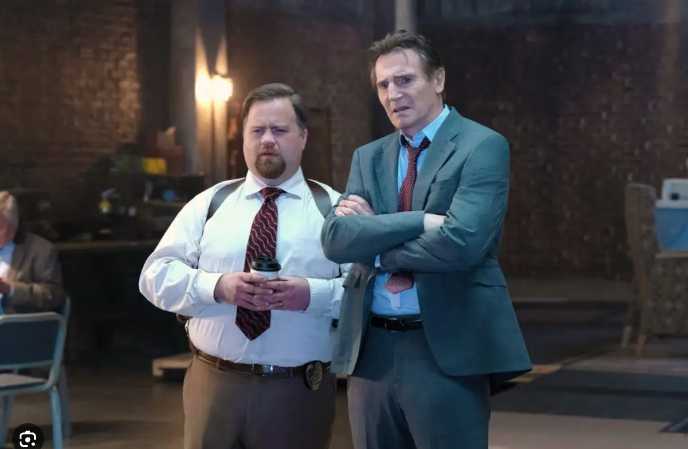
Visually, The Naked Gun (2025) captures the franchise’s signature aesthetic—bright, colorful, and intentionally over-the-top. Schaffer and cinematographer Frank Masi adopt a retro visual style that echoes the original films, with wide shots that emphasize the absurdity of the action and close-ups that highlight Neeson’s deadpan expressions. The film’s production design is meticulous, from the cluttered, outdated Police Squad office (complete with vintage equipment and a poster of Frank Sr.) to the opulent galas and chaotic MMA arena. The sight gags are relentless and creative: a running joke involving a coffee machine that keeps exploding, a mime who gets mistaken for a suspect and arrested, and Frank accidentally wearing a dress to a formal event (complete with a deadpan line about “undercover protocol”). Schaffer understands that the key to Naked Gun humor is quantity—jokes come so fast that if one falls flat, another is right around the corner—and he delivers, with a joke-per-minute ratio that’s truly astounding. Even the end credits are filled with gags, a nod to the original films’ playful approach to closing sequences.
Musically, the film leans into nostalgia while adding modern flair. The iconic Naked Gun theme song returns, remastered for 2025, instantly transporting fans back to the franchise’s glory days. Composer Dominic Lewis crafts a score that blends upbeat, whimsical melodies with dramatic orchestration, mirroring the film’s mix of slapstick and action. The soundtrack also includes licensed tracks from artists like “Weird Al” Yankovic and classic rock songs, which punctuate key comedic moments. The sound design is equally playful: the exaggerated sound of a rubber chicken hitting a villain, the absurdly loud crash of a car into a pastry shop, and the over-the-top “boing” sound effect when Frank trips over his own feet all add to the film’s cartoonish charm. Schaffer uses sound to enhance the humor, turning even the simplest actions into laugh-out-loud moments.
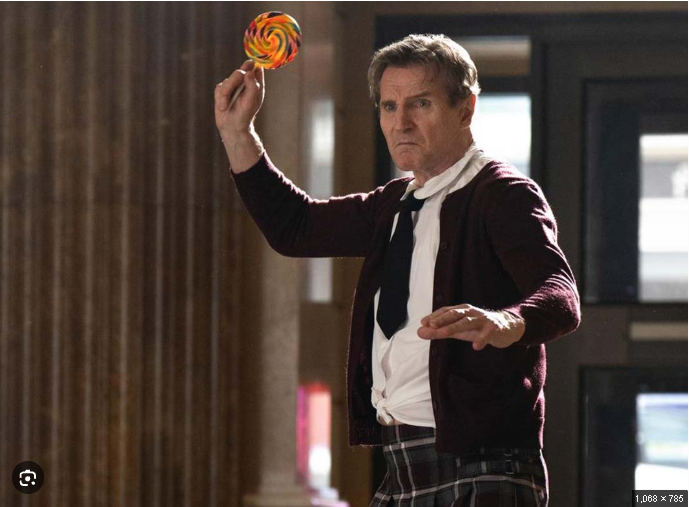
What sets The Naked Gun (2025) apart from other reboots is its refusal to overcomplicate the formula. Unlike many modern comedies that rely on self-referential humor or mean-spirited jokes, this film stays true to the original’s ethos: unpretentious, silly, and joyfully absurd. Schaffer and his team don’t try to “fix” what wasn’t broken; instead, they honor the franchise’s legacy by delivering the same kind of rapid-fire slapstick and deadpan humor that made the original films beloved. The film also avoids the trap of relying solely on nostalgia; while there are plenty of nods to the original trilogy, it stands on its own as a funny, accessible comedy that new audiences can enjoy. As one critic noted, it’s “the first great spoof film in decades”—a testament to Schaffer’s ability to capture the magic of the original while making it feel fresh and relevant.
Of course, the film is not without its flaws. Some critics have noted that the humor is uneven at times, with a few gags that feel forced or fail to land. The third act also feels slightly rushed, with the climax wrapping up too quickly and some plot threads left underdeveloped. Additionally, while Neeson’s performance is strong, he can’t quite match Nielsen’s iconic charisma—though that’s a high bar to clear. But these minor shortcomings are easily overshadowed by the film’s sheer joy. The Naked Gun (2025) is not meant to be a masterpiece of cinema; it’s meant to make audiences laugh, and it succeeds spectacularly. In an era where comedies often feel formulaic or overly polished, this film’s unapologetic absurdity is a breath of fresh air.
The film’s commercial success is a testament to its appeal: it opened at No. 1 at the U.S. box office, grossing over $30 million in its opening weekend, and went on to become one of the highest-grossing comedies of 2025. Its popularity also sparked renewed interest in the original trilogy, with streaming views of the 1988 The Naked Gun: From the Files of Police Squad! increasing by 200% after the reboot’s release. For longtime fans, the reboot is a loving tribute to a franchise that defined their childhoods; for new audiences, it’s an introduction to a style of comedy that’s both timeless and hilarious. It’s also a reminder that slapstick comedy—when done well—can be just as engaging and entertaining as any drama or action film.
In the end, The Naked Gun (2025) is a triumph—a reboot that honors its legacy while standing on its own. Liam Neeson delivers a career-best comedic performance, the supporting cast is stellar, and the film’s nonstop gags and playful tone capture the magic of the original trilogy. Akiva Schaffer has proven that he understands what makes Naked Gun special: it’s not about complex plots or deep characters; it’s about unadulterated fun. For website readers, it’s a must-see comedy of 2025—one that will have you laughing out loud from start to finish, and quoting lines long after the credits roll. Whether you’re a diehard fan of the original films or a newcomer to the franchise, The Naked Gun (2025) is a gloriously absurd romp that delivers exactly what it promises: pure, unpretentious joy.
Final Verdict: A hilarious, heartfelt reboot that honors the Naked Gun legacy while injecting fresh energy into the franchise. Liam Neeson’s deadpan performance, Akiva Schaffer’s sharp direction, and the film’s nonstop slapstick humor make it one of the funniest comedies of 2025. While it’s not perfect, its sheer joy and faithfulness to the original films make it a must-see for fans and casual viewers alike. In a world of overly complicated comedies, The Naked Gun (2025) is a welcome return to the kind of silly, laugh-out-loud humor that brings people together. It’s proof that some franchises are worth reviving—and that absurdity will always be timeless.
Leave a Reply