Review: 28 Years Later (2025) – Danny Boyle & Alex Garland’s Triumphant, Terrifying Return to the Rage Virus Apocalypse
In 2002, Danny Boyle and Alex Garland redefined the zombie horror genre with 28 Days Later—a gritty, pulse-pounding thriller that introduced the world to the “rage virus,” a contagious pathogen that turns humans into homicidal maniacs and reduces Britain to a desolate wasteland. Fifteen years later, 28 Weeks Later expanded the franchise’s lore, exploring the fragile hope of rebuilding society before chaos erupted once more. Now, nearly two decades after that sequel, Boyle and Garland have reunited to deliver 28 Years Later (2025)—a triumphant return to the apocalyptic world they created, one that honors the franchise’s legacy while pushing it into bold, uncharted territory. Unlike many legacy sequels that feel like cynical cash-grabs, this film is a thoughtful, visually inventive, and surprisingly emotional continuation of the series, blending the raw intensity of the original with fresh ideas, stunning performances, and a haunting meditation on survival, humanity, and the cost of hope. With a Metascore of 83, an IMDb rating of 7.1, and a global box office of over $151 million, 28 Years Later cements itself as one of the greatest legacy sequels ever made—and a must-see horror film of 2025. For website readers, it’s a standout review subject: a film that will thrill longtime fans, captivate new audiences, and spark conversations about the genre’s power to reflect our deepest fears and hopes.
Set 28 years after the initial outbreak of the rage virus—first unleashed from a British laboratory in 2002—the film opens on a small, isolated island off the coast of Scotland, one of the few remaining safe havens in a quarantined Britain. The island is home to a tight-knit community of survivors, including Isla (Jodie Comer), a fiercely protective leader who grew up in the aftermath of the apocalypse, and her childhood friend Jamie (Aaron Taylor-Johnson), a skilled scavenger with a haunted past. The island’s fragile peace is maintained by a heavily defended causeway that connects it to the mainland—a barrier meant to keep out the infected, who have roamed the desolate countryside for nearly three decades. For most of the island’s residents, the mainland is a forbidden wasteland, a place of unspeakable horror that exists only in stories. But when young Spike (Alfie Williams), a curious teen who has never set foot on the mainland, stows away on a supply mission, he uncovers a secret that threatens to destroy everything the survivors have built: the rage virus has evolved, mutating not only the infected but also the few humans who have managed to survive on the mainland. What follows is a harrowing journey into the heart of darkness, as Isla and Jamie venture into the mainland to rescue Spike—and confront the terrifying truth about the virus’s evolution and the lies their community has been told.
Boyle and Garland’s greatest achievement with 28 Years Later is their refusal to repeat the formula that made the first two films successful. Instead, they use the 28-year time jump to explore the long-term effects of an apocalypse—not just the physical devastation, but the psychological toll of surviving in a world where trust is a luxury and hope is a liability. The film is more contemplative than its predecessors, asking difficult questions about what it means to be human when civilization has collapsed: How do we hold onto our humanity when surrounded by chaos? What do we sacrifice to protect the ones we love? And is hope worth chasing when it could lead to destruction? These themes are woven seamlessly into the narrative, never feeling heavy-handed, and are anchored by the film’s stellar cast—particularly Jodie Comer and Aaron Taylor-Johnson, who deliver career-best performances.
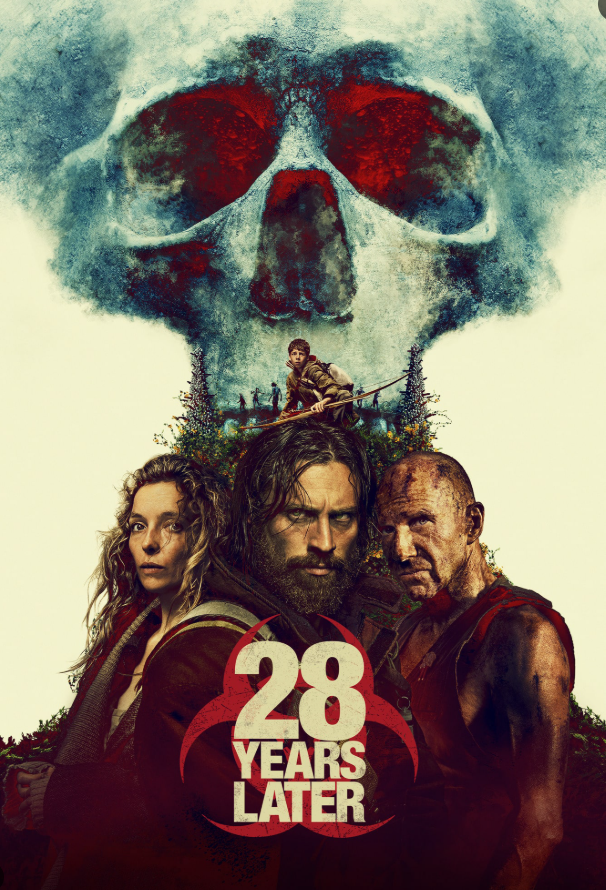
Jodie Comer is nothing short of extraordinary as Isla, a character forged by trauma but unbroken by it. Comer brings a quiet intensity to the role, balancing Isla’s fierce protectiveness with vulnerability—she’s a leader who will do anything to keep her community safe, but she’s also haunted by the loss of her family to the rage virus. In one pivotal scene, Isla confronts Dr. Kelson (Ralph Fiennes), a mysterious scientist who has been hiding the truth about the virus’s evolution, and Comer’s performance is electrifying: her voice trembles with anger and betrayal, her eyes blazing with a fire that never dims, even in the face of unspeakable horror. It’s a performance that is both powerful and nuanced, reminding viewers why Comer is one of the most talented actresses of her generation. Aaron Taylor-Johnson is equally impressive as Jamie, a man who has seen the worst of the apocalypse and carries that pain with him everywhere he goes. Taylor-Johnson brings a rugged charm to the role, balancing Jamie’s tough exterior with a deep sense of loyalty to Isla and the community. His chemistry with Comer is palpable, their friendship serving as the emotional core of the film—their banter is sharp, their bond is unbreakable, and their shared trauma gives the story a depth that elevates it beyond a typical horror film.
Alfie Williams, in a breakout role as Spike, delivers a performance that is both endearing and haunting. Spike is the film’s emotional anchor, a young man who represents the hope of a future—one that the older survivors have long given up on. Williams captures Spike’s curiosity, his naivety, and his courage, making him a character that viewers can’t help but root for. When he ventures into the mainland and witnesses the horrors of the mutated infected, Williams’s performance is raw and visceral, capturing the terror of a child who has been sheltered from the worst of the apocalypse suddenly confronting it head-on. Ralph Fiennes, meanwhile, chews the scenery as Dr. Kelson, a complex villain who is not inherently evil but is driven by a twisted sense of purpose. Fiennes brings a cold, calculating charm to the role, making Dr. Kelson a villain who is both terrifying and sympathetic—he truly believes that his actions are for the greater good, even as they lead to destruction.
Visually, 28 Years Later is a masterpiece—thanks to Boyle’s visionary direction and cinematographer Anthony Dod Mantle’s stunning work. The film adopts a gritty, documentary-like style that echoes the original 28 Days Later, with handheld cameras that immerse viewers in the chaos and intimacy of the survivors’ journey. But Boyle also experiments with cutting-edge technology, using iPhones and drones to capture the desolation of the mainland in a way that feels both fresh and terrifying. The color palette is stark and haunting: the island is bathed in soft, natural light, a symbol of hope and safety, while the mainland is a grim landscape of gray skies, burnt forests, and abandoned cities, with the infected’s glowing eyes cutting through the darkness. The film’s action sequences are intense and visceral, particularly a heart-stopping chase through an abandoned London Underground station, where the mutated infected—faster, more feral, and more intelligent than their predecessors—hunt the survivors with relentless fury. Boyle’s use of “bullet time” during these sequences adds a surreal, nightmarish quality, making every moment feel like a fight for survival.
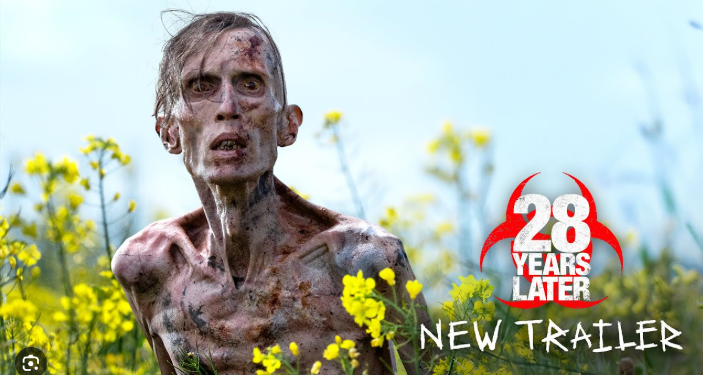
One of the film’s most striking innovations is its portrayal of the mutated rage virus. Unlike the original infected, who were driven by mindless rage, the mutated infected in 28 Years Later have evolved—they can communicate, coordinate attacks, and even mimic human behavior, making them far more terrifying. Boyle and Garland avoid the typical “zombie” tropes, instead framing the infected as sick people, victims of a virus that has warped their humanity rather than turning them into the undead. This choice adds a layer of tragedy to the film—these are not monsters, but people who have been robbed of their humanity, and their presence serves as a haunting reminder of what we could become if we let fear and rage consume us. As one critic noted, “some people will probably be annoyed that 28 Years Later has introduced different types of infected, but these aren’t zombies; these are sick people”—a distinction that elevates the film beyond a typical horror sequel.
Musically, 28 Years Later is elevated by the Scottish hip-hop group Young Fathers, who composed the film’s score—taking over from John Murphy, who scored the first two films. Young Fathers’ score is a haunting blend of electronic beats, haunting vocals, and eerie instrumentals, perfectly capturing the film’s tone of dread and hope. The soundtrack also includes licensed tracks, including Tom Jones’s “Delilah” and a surreal use of the Teletubbies theme song, which is used to unsettling effect during a particularly tense scene. The sound design is equally meticulous: the guttural screams of the infected, the creak of abandoned buildings, and the distant hum of the wind all blend to create a world that feels both desolate and alive. Young Fathers’ score is a departure from the original films’ soundtracks, but it fits perfectly with 28 Years Later’s darker, more contemplative tone, enhancing the film’s emotional impact and adding to its sense of unease.
What sets 28 Years Later apart from other horror sequels is its emotional depth. This is not just a film about surviving a zombie apocalypse; it’s a film about love, loss, and the power of hope in the face of overwhelming darkness. The relationship between Isla and Jamie is the heart of the film, their bond serving as a reminder that even in the worst of times, human connection is our greatest strength. The film also explores the theme of legacy—how the choices we make today shape the future, and how the mistakes of the past can come back to haunt us. Dr. Kelson’s secret—his role in the virus’s evolution and his attempts to cover it up—serves as a cautionary tale about the dangers of playing God, while Spike’s journey represents the hope of a new generation that refuses to be defined by the past.
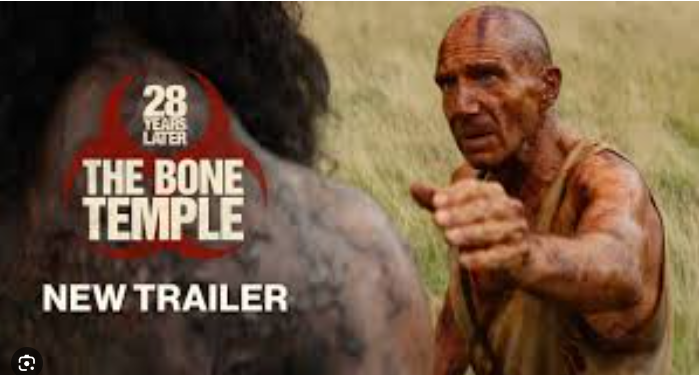
Of course, the film is not without its flaws. Some critics have noted that the third act feels slightly rushed, with the climax wrapping up too quickly and some plot threads left underdeveloped. Additionally, the film’s pacing is uneven at times—slower, more contemplative moments are interspersed with intense action sequences, which may jar some viewers. But these minor shortcomings are easily overshadowed by the film’s strengths. 28 Years Later is a film that rewards multiple viewings, as each frame is filled with hidden details and subtle references to the first two films, as well as deeper themes that reveal themselves upon closer inspection. It’s also worth noting that the film was shot back-to-back with its sequel, 28 Years Later: The Bone Temple, which is set to be released in January 2026—a choice that hints at a larger narrative arc that will continue to explore the franchise’s lore.
The film’s commercial and critical success is a testament to its appeal. It opened at No. 1 at the U.S. and U.K. box offices, grossing over $30 million in its opening weekend in the U.S. alone, and went on to become one of the highest-grossing horror films of 2025. It also received widespread critical acclaim, with critics praising Boyle’s direction, Garland’s screenplay, the cast’s performances, and the film’s visual innovation. As one critic wrote, “28 Years Later is an exciting and terrifying horror movie, a fresh and nuanced entry into the zombie catalog, a mesmerizing philosophical tale, all packed into a coming-of-age structure—it’s one of the best zombie horror movies we’ve been given in years.” For longtime fans of the franchise, the film is a loving tribute to the world Boyle and Garland created, while for new audiences, it’s an accessible entry point into a genre-defining series.
In the end, 28 Years Later (2025) is a triumph—a legacy sequel that honors its roots while pushing the franchise forward. Danny Boyle and Alex Garland have proven that they still have plenty of fresh inspiration for pulse-pounding terror and emotional depth, delivering a film that is both terrifying and thought-provoking. With stellar performances from Jodie Comer, Aaron Taylor-Johnson, and Alfie Williams, stunning visuals, and a haunting score, 28 Years Later is a must-see for horror fans and cinephiles alike. It’s a film that reminds us that even in the darkest of times, hope is not lost—and that our humanity is our greatest strength. For website readers, it’s a standout film of 2025, one that will linger in the mind long after the credits roll and leave audiences eagerly awaiting the next chapter in the franchise.
Final Verdict: A terrifying, emotional, and visually stunning return to the rage virus apocalypse, 28 Years Later is Danny Boyle and Alex Garland at their best. With career-defining performances, innovative horror elements, and a heartfelt exploration of survival and hope, it’s one of the greatest legacy sequels ever made and a must-see horror film of 2025. While it has minor pacing issues, its sheer power and emotional depth make it a standout in the franchise and the genre. Whether you’re a longtime fan of 28 Days Later or a newcomer to the series,28 Years Later is a harrowing, unforgettable journey that will leave you on the edge of your seat—and thinking about its themes long after the credits roll.