The Shawshank Redemption: A Timeless Ode to Hope, Friendship, and the Unbreakable Human Spirit
Few films in cinematic history manage to resonate across generations, cultures, and personal struggles quite like Frank Darabont’s The Shawshank Redemption (1994). Based on Stephen King’s novella Rita Hayworth and Shawshank Redemption, the movie was not an immediate box-office sensation, yet over time it has evolved into one of the most beloved and revered films ever made. To this day, it consistently tops audience polls, film rankings, and emotional impact lists, not because of explosive action or glamorous storytelling, but because it speaks directly to the deepest human desires: freedom, dignity, friendship, and hope. More than a prison drama, The Shawshank Redemption is a profound meditation on resilience, patience, and the quiet rebellion of keeping one’s soul alive in a world designed to break it.
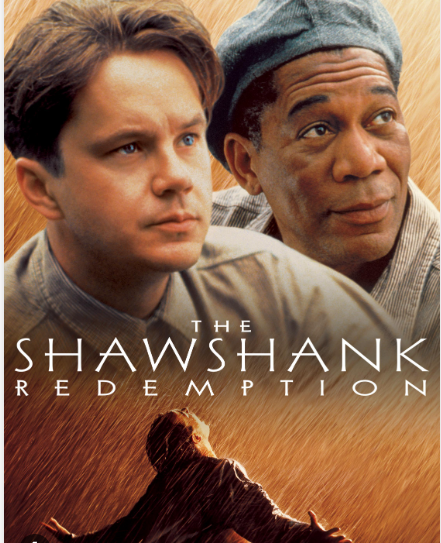
At the center of the story is Andy Dufresne, a mild-mannered banker played with extraordinary restraint by Tim Robbins. Wrongfully convicted of the double murder of his wife and her lover, Andy is sentenced to life at Shawshank State Penitentiary, a grim, dehumanizing facility where corruption, violence, and hopelessness are daily realities. From the moment he steps inside the prison walls, Andy appears out of place—quiet, intellectual, and emotionally detached. Yet beneath his calm exterior lies an unshakable resolve that sets him apart from every other inmate. His journey is not one of physical escape alone; it is a spiritual and psychological triumph over a system built to erase individuality.
The film’s emotional core is forged through the decades-long friendship between Andy and Ellis “Red” Redding, portrayed masterfully by Morgan Freeman. Red, a seasoned inmate and self-proclaimed “guy who can get things,” initially views Andy with curiosity and skepticism. Over time, however, the two men form a bond that transcends the brutality of prison life. Red serves as the film’s narrator, his warm, gravelly voice guiding the audience through Andy’s quiet acts of resistance and humanity. Their relationship is built on mutual respect, trust, and quiet understanding—rare commodities in a place where betrayal and self-preservation dominate. Red’s transformation from a cynical, institutionalized prisoner to a man who rediscovers hope is just as compelling as Andy’s journey, making the film a story of two men saving each other.
One of the film’s most striking qualities is its refusal to sensationalize prison violence. Instead of relying on shock value, Darabont focuses on the psychological toll of incarceration: the slow erosion of identity, the numbing effect of routine, and the quiet death of hope. The phrase “get busy livin’, or get busy dyin’” encapsulates the film’s central philosophy. Andy chooses life—not in the reckless sense, but in preserving his dignity, his intellect, and his belief in a future beyond the walls. He does so through small, persistent acts of rebellion: playing opera over the prison loudspeakers, building a library for the inmates, helping guards and the warden with financial schemes while secretly plotting his freedom. These acts are not grand or violent; they are acts of preserving humanity in a dehumanizing world.
The symbolic power of the film runs deep. The prison itself represents any oppressive force in life—fear, despair, regret, societal confinement, or personal trauma. Andy’s escape, through a tunnel he digs over nearly 20 years, is a metaphor for patience, perseverance, and long-term vision. His decision to crawl through hundreds of yards of sewage to reach freedom is a powerful image of enduring suffering to reclaim one’s life. The scene remains one of cinema’s most iconic moments not because of its spectacle, but because of its emotional weight: a man who refused to let the world break him finally breaking free.
Equally memorable is the film’s critique of corruption and institutional hypocrisy. The prison system, meant to punish and rehabilitate, is instead run by greedy, violent officials who exploit inmates for labor, money, and control. The warden, who quotes the Bible while engaging in fraud and murder, embodies moral corruption. In contrast, Andy uses his knowledge of finance not to harm others, but to gain small privileges and protect himself, all while secretly dismantling the system from within. The film suggests that true morality comes not from institutions or authority, but from individual choice and compassion.
Hope is the beating heart of The Shawshank Redemption, and it is presented not as naivety, but as an act of courage. Andy famously says, “Hope is a good thing, maybe the best of things, and no good thing ever dies.” This line has become a universal mantra for anyone facing hardship. Unlike many dark dramas, the film refuses to surrender to cynicism. Even in the darkest moments—when Andy is beaten, isolated, or abused—his hope remains unbroken. It is this quiet persistence that makes his eventual victory so deeply satisfying.
The film’s technical craftsmanship also contributes to its timelessness. Roger Deakins’ cinematography balances cold, muted tones inside the prison with warm, bright imagery in the flashbacks and the final coastal scenes, visually contrasting imprisonment with freedom. Thomas Newman’s score is delicate, haunting, and uplifting, weaving emotion into every scene without overstatement. The pacing is deliberate, allowing the audience to feel the weight of time passing, making the payoff all the more powerful.
Though released in a decade filled with landmark films, The Shawshank Redemption was overshadowed upon its release by Forrest Gump and Pulp Fiction. However, its legacy grew through home video, television broadcasts, and word of mouth. Audiences connected with its universal themes: anyone who has felt trapped, whether by circumstance, failure, or regret, can see themselves in Andy and Red. The film does not offer easy answers or cheap inspiration; it earns its emotion through authentic characters and genuine human struggle.
In the end, The Shawshank Redemption endures because it speaks to the part of us that refuses to be defeated. It reminds viewers that freedom is not merely the absence of physical bars, but the presence of self-worth, purpose, and hope. Whether one is serving a literal prison sentence or trapped in the prisons of daily life, the film’s message remains universal: no matter how dark the night, perseverance and friendship can light the way to redemption.
Decades after its release, The Shawshank Redemption remains more than a great movie—it is a cultural touchstone, a source of comfort, and a testament to the unbreakable strength of the human spirit. It teaches us that even in the most hopeless places, hope itself can set us free.