Review: How to Train Your Dragon – The Timeless Magic of a Story About Kindness Over Strength
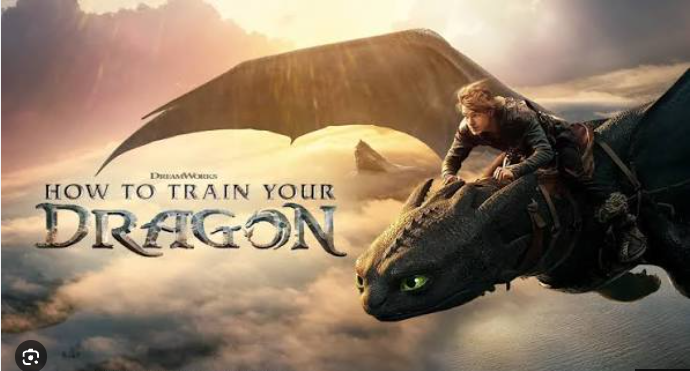
There are animated films that entertain us for an afternoon, and there are animated films that grow with us for a lifetime. How to Train Your Dragon, DreamWorks’ 2010 landmark feature, belongs firmly to the latter category. On the surface, it looks like a typical family-friendly adventure: a young Viking boy, a mythical creature, and a classic underdog story of courage and triumph. But beneath its vibrant animation, thrilling flight sequences, and warm sense of humor lies an incredibly thoughtful coming-of-age drama that redefines what strength, bravery, and understanding truly mean. More than fifteen years after its release, the film has lost none of its emotional power. It remains one of the greatest animated films ever made, a perfect balance of heart, creativity, and thematic depth that appeals equally to children, teenagers, and adults.
Set on the storm-battered Nordic island of Berk, the story opens in a world defined by unshakable tradition and brutal rivalry. For generations, the local Viking tribe has lived in constant conflict with dragons, which raid their villages, burn their homes, and steal their livestock. To the people of Berk, dragons are nothing more than mindless, destructive monsters that must be hunted and killed without mercy. Every young Viking is raised with one clear purpose: to become a fierce dragon slayer and protect their home. Standing directly against this rigid norm is the film’s protagonist, Hiccup Horrendous Haddock III. Small, scrawny, clumsy, and endlessly curious, Hiccup is nothing like the tough, muscular warriors his tribe admires. While everyone around him dreams of defeating dragons in combat, he spends his time tinkering with gadgets, sketching strange ideas, and questioning everything his society believes.
Hiccup’s biggest struggle is not with the dragons themselves, but with the gap between who he is and who everyone expects him to be. As the son of Stoick the Vast, the tribe’s towering, authoritative chief, he carries an enormous weight of expectation. Stoick loves his son deeply, but he cannot understand Hiccup’s gentle nature or his refusal to embrace violence. The community dismisses Hiccup as weak and useless, a disappointment in a village that values brute strength above all else. This quiet conflict makes up the film’s emotional foundation. Long before any major action sequence begins, we already care about Hiccup, because almost everyone has felt the pressure of fitting into a role they were never meant to fill.
The film’s turning point arrives when Hiccup successfully shoots down a rare Night Fury, the most mysterious and feared dragon in the sky. According to Viking lore, Night Furies are invisible, unstoppable killing machines that never leave survivors. Yet when Hiccup finds the fallen creature in the woods, knife in hand, he cannot bring himself to kill it. Instead of a terrifying monster, he sees a wounded, scared animal trapped and helpless. In that pivotal moment, Hiccup makes a choice that changes the fate of Berk forever: he spares the dragon’s life. This simple act of kindness is the core of the entire film, a bold rejection of the hatred and prejudice that has defined his tribe’s existence for centuries.
Naming the dragon Toothless, Hiccup begins a secret, tentative friendship. He slowly earns the creature’s trust, nursing its injured wing, feeding it fish, and learning to read its subtle body language. What unfolds is one of the most genuine, heartfelt relationships in modern animation. There is no dialogue between Hiccup and Toothless. Their bond builds entirely through gestures, eye contact, playful interactions, and quiet moments of vulnerability. Toothless is wild, skittish, and instinctively defensive, yet he responds to Hiccup’s patience and compassion with unwavering loyalty. In return, Toothless gives Hiccup something no human in his village ever could: unconditional acceptance. For the first time in his life, Hiccup does not need to prove himself strong or tough. He just needs to be himself.
What makes How to Train Your Dragon so special is its radical central message: the world’s greatest conflicts are rarely born from evil, but from misunderstanding. The Vikings hate dragons because they only ever see their destructive raids. The dragons attack humans because they are forced to steal food to feed a monstrous, dominant dragon that controls their nest. Both sides believe they are fighting for survival, and neither side stops to question why the hatred exists in the first place. Hiccup’s unique genius is not in his inventions or his courage; it is in his ability to look past tradition and prejudice. He realizes that the so-called “monsters” are intelligent, emotional creatures capable of love, fear, and connection. This idea is simple enough for children to grasp, yet profound enough to resonate deeply with adult audiences.
Visually, the film was revolutionary for its time and still holds up beautifully today. The flight sequences remain pure cinematic magic. The camera glides freely through clouds, dives over ocean waves, and twists around mountain peaks, creating a true sense of speed, height, and weightlessness. Riding on Toothless’s back, Hiccup experiences a world no other Viking has ever known, and the audience rides alongside them. The animators pay incredible attention to Toothless’s movements, modeling his body language after real cats and dogs. His playful tilts of the head, curious stares, and subtle displays of affection make him feel less like a fictional monster and more like a living, breathing animal with a distinct personality. paired with John Powell’s legendary orchestral score, these soaring scenes become emotionally transcendent. The music swells with hope, wonder, and freedom, perfectly capturing the feeling of breaking free from limitations and discovering your place in the world.
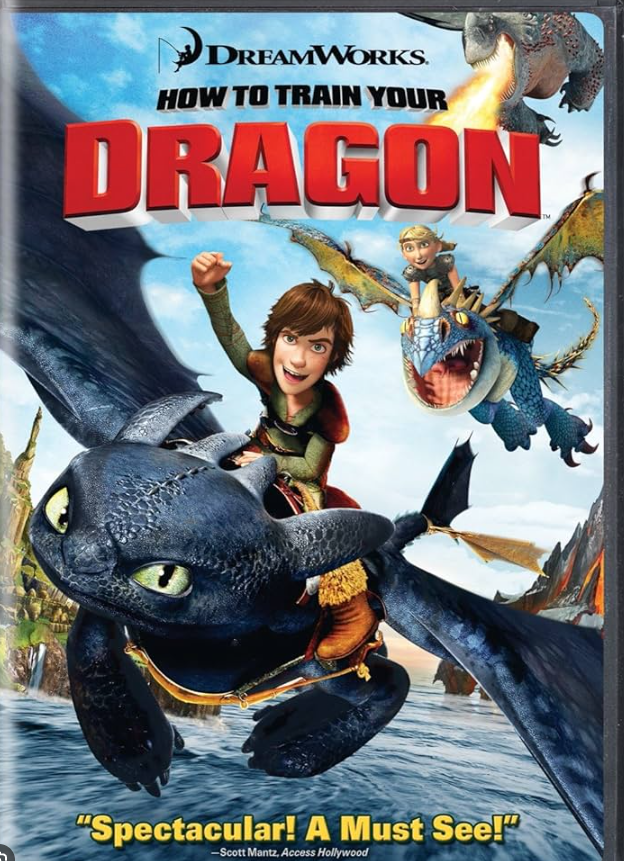
Beyond its stunning visuals and heartfelt friendship, the film is an incredibly nuanced coming-of-age story. Hiccup’s growth is not a typical “zero-to-hero” arc where he suddenly becomes strong and popular. Instead, he matures by embracing his differences. He does not defeat dragons with force; he unites two warring worlds with empathy. His journey teaches viewers that true bravery is not the absence of fear, but choosing kindness even when everyone around you chooses hatred. True strength is not dominating others, but understanding them. Even Stoick’s character arc is deeply moving. The stern chief begins as a rigid leader trapped in old traditions, but he gradually learns to listen to his son, to question his own biases, and to prioritize connection over conflict. Their father-son dynamic adds incredible emotional weight, turning a fantasy adventure into a universal story about family, growth, and generational change.
Critically, the film avoids almost every common pitfall of mainstream animation. It has no cartoonish villains, no forced humor, no cheesy one-liners, and no oversimplified resolutions. The conflict feels real, the stakes feel genuine, and every character’s motivation makes sense within their worldview. Even the film’s bittersweet final act, in which Hiccup loses part of his leg and Toothless loses part of his flight ability, reinforces the story’s grounded humanity. Growth and peace always come with sacrifice. Victory rarely comes without scars. Yet even with their injuries, the boy and dragon remain perfect partners, proving that flaws and vulnerabilities do not weaken us—they bind us closer together.
Years later, How to Train Your Dragon endures because its core message is timeless. In a world that often glorifies conflict, division, and dominance, the film champions empathy, communication, and compassion. It reminds us that the things we fear are usually the things we do not understand, and that the most powerful way to change the world is to first change the way we see it. It also celebrates individuality, encouraging anyone who has ever felt out of place to trust their instincts, embrace their uniqueness, and refuse to conform to harmful traditions.
In the crowded landscape of modern animated franchises, very few achieve the consistent heart and quality of How to Train Your Dragon. The first film stands as its purest, most perfect entry: tightly structured, emotionally focused, visually breathtaking, and thematically rich. It is not just one of DreamWorks’ finest achievements; it is a modern classic that redefined what family animation could accomplish. It makes us laugh, it makes us cry, and it leaves us believing in the quiet, extraordinary power of kindness.
Final Verdict
How to Train Your Dragon is a flawless animated masterpiece. Blending exhilarating adventure, stunning visual craft, and deeply human storytelling, it transcends age and genre to deliver a timeless tale of friendship, courage, and understanding. More than just a dragon adventure, it is a moving coming-of-age story about embracing difference, challenging prejudice, and redefining strength. Warm, wise, and endlessly rewatchable, it remains one of the greatest animated films of the 21st century—a true classic that only grows richer with every viewing.
Leave a Reply