Film Review: Hamnet (2025) – A Quietly Devastating Ode to Grief, Family, and the Ghost Behind Shakespeare’s Greatest Tragedy
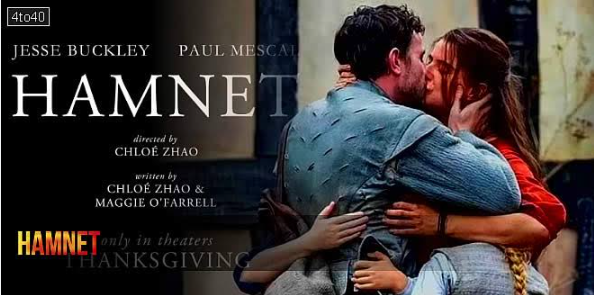
Most films about artists fixate on their glory: their breakthroughs, their fame, their immortal masterpieces. Chloé Zhao’s breathtaking 2025 drama Hamnet does the exact opposite. It turns away from the legend of William Shakespeare to stare unflinchingly at the quiet, private sorrow that shaped his most enduring work. Based on Maggie O’Farrell’s award-winning novel, this lyrical, haunting historical drama reimagines Shakespeare’s domestic life through the eyes of his overlooked wife, Agnes Hathaway, unpacking how the sudden death of their eleven-year-old son Hamnet birthed the timeless tragedy of Hamlet. Slow-burn, meditative, and emotionally overwhelming, Hamnet is not a biopic about literary genius. It is a universal story of parental grief, fractured marriage, and how unspeakable loss transforms ordinary people—and creates extraordinary art.
Set in rural Stratford-upon-Avon during the late 1500s, the film paints a tender, unassuming portrait of the Shakespeare family long before Will becomes London’s most celebrated playwright. Paul Mescal stars as a young, restless William Shakespeare, a dreamer trapped in provincial small-town life. He is loving but distracted, ambitious yet ungrounded, constantly pulled between his devotion to his family and his hunger to chase a greater destiny in the bustling London theater scene. Jessie Buckley shines as Agnes Hathaway, a sharp, intuitive, spiritually attuned woman deeply rooted in nature and domestic life. While historical records reduce her to a footnote, Zhao and Buckley resurrect her as the family’s emotional anchor: steady, empathetic, fiercely protective of her children, and quietly resentful of her husband’s distant dreams.
For the first act, Hamnet settles into gentle, observational rhythms. We watch the family’s quiet daily rituals: working the land, tending gardens, sharing meals, and nurturing their bright, curious son Hamnet. The boy is playful, thoughtful, and imaginative—a child full of life, whose presence fills the small household with warmth and hope. Zhao’s signature visual style flourishes here; she frames the Tudor countryside as both serene and mystical, using soft natural light, sweeping field shots, and intimate household close-ups to build a world that feels safe, tangible, and deeply human. There is no dramatic conflict, no grand storytelling, just the fragile happiness of a family holding life gently. This peaceful setup makes the tragedy that follows infinitely more devastating.
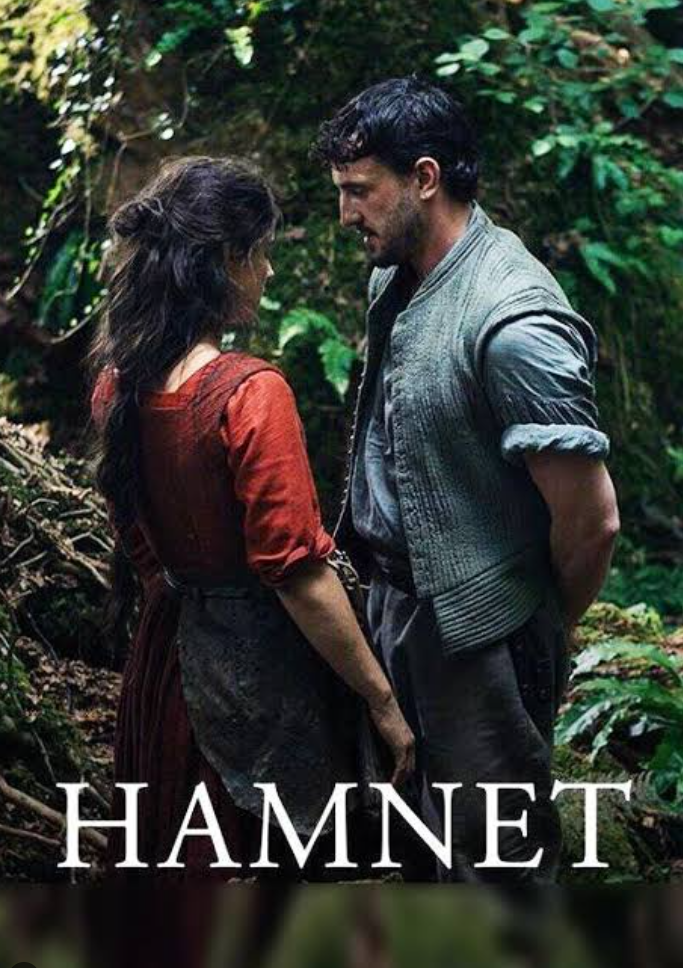
When a brutal plague sweeps through Stratford, disaster arrives swiftly and silently. While William is away in London, building his career and escaping the stagnation of rural life, Hamnet falls suddenly ill. Agnes fights desperately to save her son, using herbal remedies, prayer, and every maternal instinct she possesses, yet she cannot halt the inevitable. The boy’s sudden, untimely death fractures the family completely. What follows is the film’s emotional core: a raw, unflinching portrayal of grief that refuses Hollywood’s sentimental shortcuts. There are no dramatic monologues, no cathartic speeches, no easy closure. Instead, Zhao captures grief as it truly exists—silent, disorienting, repetitive, and isolating.
Jessie Buckley’s performance as Agnes is nothing short of career-defining. She portrays maternal sorrow with breathtaking subtlety, shifting from numb disbelief to raging grief, then to hollow, quiet endurance. Buckley’s greatest strength is her ability to communicate overwhelming pain through tiny, restrained gestures: a trembling hand, a vacant stare, a paused breath. She embodies a mother’s guilt and longing without overacting, making every moment feel authentic and visceral. Agnes’s grief is not performative; it is a private, consuming storm that reshapes her identity, hardening her while deepening her compassion for the fragility of all life.
Paul Mescal’s understated turn as William Shakespeare is equally vital. Mescal avoids every cliché of the “tortured artist” trope. His Shakespeare is not brilliant and aloof; he is flawed, absent, and deeply conflicted. He left home to chase his future, only to return and find his family broken beyond repair. His grief manifests differently from Agnes’s: where she turns inward and lingers in mourning, he channels his pain into writing. Mescal beautifully captures the quiet guilt of a man who pursued greatness and lost the most important part of himself in the process. The couple’s fractured dynamic becomes the film’s central tension: two people shattered by the same loss, yet unable to comfort each other because their grief moves in entirely different rhythms.
What makes Hamnet such a unique historical drama is its radical reversal of perspective. For centuries, audiences have admired Hamlet as a work of pure literary genius. Hamnet reveals it as a wound translated into art. The film draws a haunting, intimate connection between the real boy Hamnet and the fictional Prince Hamlet, suggesting that Shakespeare’s greatest tragedy was never just a work of fiction—it was a ghostly conversation with the son he lost. Zhao does not overexplain this link or force heavy symbolism. Instead, she lets the parallel breathe quietly, allowing viewers to feel how personal loss reshaped Shakespeare’s understanding of death, doubt, and sorrow.
Visually, the film is stunningly crafted. Zhao’s love for natural textures, open landscapes, and organic lighting defines every frame. The rural English countryside shifts from warm, golden tranquility in the early scenes to cold, muted gray tones after Hamnet’s death, mirroring the family’s emotional decay. The production design prioritizes lived-in authenticity over glamorous period detail; the wooden cottages, worn fabrics, and wild overgrown gardens feel historically accurate yet timeless. The film’s minimal, string-based score reinforces its melancholic tone, swelling softly during moments of heartbreak but never overpowering the quiet human drama at its center.
If the film has weaknesses, they lie in its deliberate slowness and narrative restraint. Viewers expecting a traditional biographical drama or a plot-driven historical thriller may find Hamnet too meditative and understated. The story unfolds patiently, prioritizing emotional texture over plot momentum, and some secondary characters lack depth. Yet these flaws are intentional creative choices. Zhao’s restraint is precisely what makes the film so powerful; she trusts her audience to sit with sorrow instead of rushing to resolve it.
Hamnet ultimately succeeds as a profound meditation on how art and grief intersect. It asks beautiful, devastating questions: What do we owe the people we lose? How does private suffering shape public genius? And what hidden pain lingers behind the masterpieces we celebrate? The film never romanticizes grief or frames loss as a simple source of inspiration. Instead, it honors the real boy Hamnet, acknowledging that every immortal line Shakespeare wrote afterward was rooted in a father’s endless regret and a family’s irreparable heartbreak.
Final Verdict
Hamnet is one of the most tender, profound, and emotionally resonant historical dramas of 2025. Led by career-best performances from Jessie Buckley and Paul Mescal, Chloé Zhao’s delicate yet devastating film strips away the myth of Shakespeare to reveal the human grief behind his greatest work. Slow, poetic, and unflinchingly honest, it is a story not just about a writer and his lost son, but about every parent who has grieved, every marriage tested by loss, and every artist who has turned pain into beauty. Quietly magnificent and endlessly haunting,Hamnet is a modern period masterpiece that lingers in the mind long after the final frame.
Leave a Reply