Film Review: Mutiny (2026) – A Tense, No‑Nonsense Maritime Action Thriller Built on Old‑School Statham Brutality
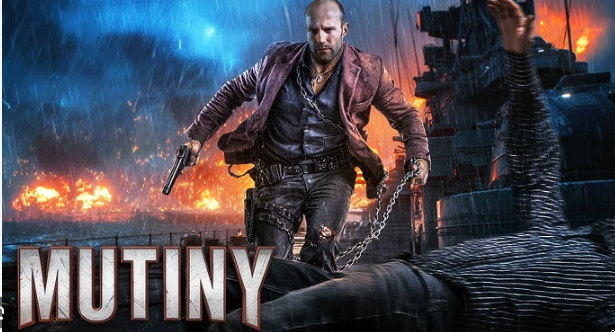
In an era bloated with CGI‑overloaded superhero spectacles and overcomplicated spy blockbusters, Mutiny (2026) stands unapologetically old‑school. A tight, brutal, and lean maritime action thriller from director Jean‑François Richet, this high‑seas crowd‑pleaser delivers exactly what audiences crave from a Jason Statham vehicle: disciplined storytelling, gritty hand‑to‑hand combat, and a straightforward underdog revenge arc with zero filler. Smartly confined to a single massive cargo ship floating in isolated international waters, the film turns a simple vigilante premise into a taut, claustrophobic battle of wits and brute force. It does not rewrite the action rulebook, but it executes its formula with relentless efficiency and unpretentious confidence.
The story centers on Cole Reed (Jason Statham), a disciplined former police officer and military veteran now working as a personal bodyguard for a humanitarian shipping magnate. When a brutal professional hit squad ambushes his client in a calculated assassination, Cole survives the chaos but is framed as the prime suspect. Left hunted, disgraced, and desperate for answers, he traces the attack’s criminal network to the Artemis, a giant commercial container ship set to sail into open ocean before evidence can be uncovered. Racing against time, Cole sneaks aboard as a stowaway, intending only to expose the corrupt conspirators and clear his name.
What he discovers onboard transforms his personal vendetta into a moral mission. Beneath the ship’s industrial, sterile exterior lies a horrific secret: the vessel’s crew is operating a large‑scale human trafficking ring, holding dozens of vulnerable refugees, including women and children, locked inside sealed shipping containers. Commanding the operation is the ruthless Captain Marko Madsen (Roland Møller), a cold, calculating mercenary who runs his ship like a floating prison, answerable to no law outside international jurisdiction. Trapped miles from shore, with no backup, no communication, and an entire crew of trained killers against him, Cole must turn the ship’s tight corridors, dark cargo bays, and towering container stacks into his battlefield.
Statham delivers precisely the grounded, stone‑solid lead performance that defines his best work. Unlike over-the-top action heroes, Cole Reed is quiet, methodical, and physically precise. He wastes no movement, no word, and no bullet. Statham’s signature restrained intensity works perfectly within the film’s confined setting; his stoic demeanor contrasts sharply with the crew’s chaotic violence, making every takedown feel earned and impactful. The actor excels at portraying ordinary moral resolve in an immoral environment—this is not a superhuman vigilante, but a disciplined man choosing to stand against injustice even when the odds are impossible.
Annabelle Wallis co‑stars as Ellis, a conflicted junior naval officer newly assigned to theArtemis. Unaware of the ship’s criminal operations, she quickly realizes something is deeply wrong onboard. Initially wary of Cole’s presence, she gradually becomes his only ally, providing crucial navigation knowledge, access to restricted decks, and tactical support. Wallis brings necessary emotional texture to the hard‑edged thriller, portraying a woman torn between duty and morality, caught in a terrifying situation beyond her control. Her dynamic with Statham avoids forced romance, focusing instead on mutual trust and survival—a refreshing choice that keeps the plot grounded and focused.
Roland Møller’s villainous turn elevates the film’s tension significantly. Madsen is not a cartoonish evil mastermind but a pragmatic, cruel opportunist who hides his corruption behind professional discipline. Calm, authoritative, and ruthlessly logical, he views human lives as disposable cargo and treats the ship as his own sovereign domain. Møller’s subtle, menacing performance creates a genuinely threatening antagonist whose quiet arrogance makes the final confrontation all the more satisfying.
Where Mutiny truly succeeds is in its masterful use of setting. The isolated cargo ship becomes a character in its own right—a metallic, labyrinthine prison of narrow stairwells, shadowy storage holds, towering containers, and echoing empty hallways. Richet shoots the action with tight, functional framing, prioritizing spatial clarity over flashy cinematography. Every fight scene is easy to follow, every ambush feels unpredictable, and every narrow escape carries genuine stakes. The open, endless ocean surrounding the vessel amplifies the sense of total isolation; there is no coming rescue, no outside authority, nowhere to run.
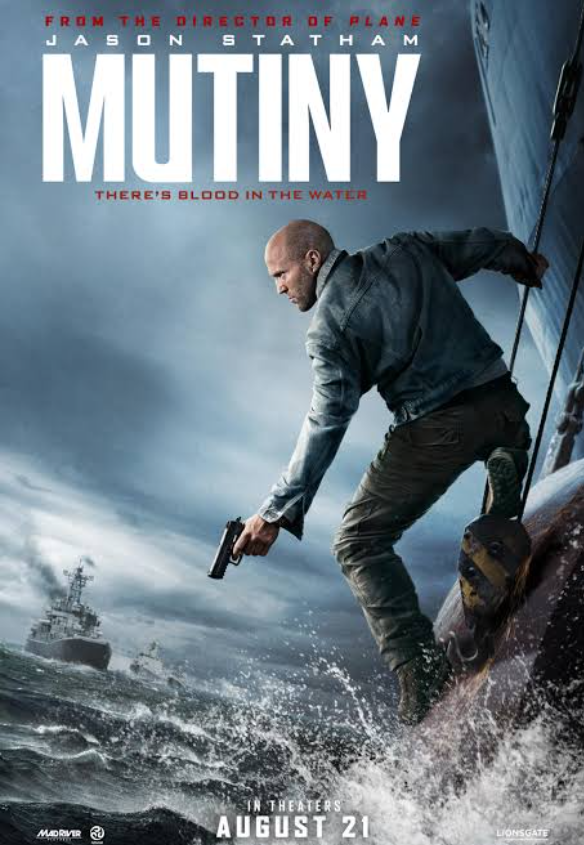
The film’s action design is intentionally raw and physical. Statham’s combat sequences rely on close-quarters brawling, tactical stealth, and bone-crunching practical stunt work. There are no overblown set pieces, no excessive explosions, and no CGI shortcuts. Every punch, stab, and grapple feels visceral and tangible, harkening back to the grounded action thrillers of the 2000s. The pacing is perfectly balanced: tense stealth sequences and quiet investigative beats break up the brutal combat, ensuring the film never devolves into mindless action fatigue.
Thematically, Mutiny offers more depth than most standard action fare. It contrasts the sterile, legal neutrality of international shipping waters with unchecked criminality, exploring how systemic corruption hides within legitimate global trade networks. The film asks quiet but powerful questions: who polices hidden exploitation operating beyond national borders? What responsibility do bystanders hold when evil is normalized within their workplace? And what does it mean to uphold morality when every rule has been broken? By tying Cole’s personal revenge to the rescue of vulnerable victims, the film elevates itself from a simple vigilante story into a statement on hidden global injustice.
That said, Mutiny embraces its formulaic limitations. The plot is highly predictable, with few genuine narrative surprises. Supporting characters beyond the two leads lack meaningful development, and the film’s central conspiracy remains surface-level, never expanding into broader political commentary. Some dialogue is functional and utilitarian, lacking subtlety or emotional nuance. Viewers seeking complex character arcs or layered storytelling will find the film straightforward and unadventurous. Additionally, the third act’s resolution feels slightly rushed, wrapping up loose ends too cleanly after such a tense build-up.
Still, these flaws are part of the film’s focused identity. Mutiny does not aim to be groundbreaking or Oscar-worthy. It aims to be a well-crafted, tightly executed action thriller, and it succeeds admirably. In a landscape filled with bloated, incoherent blockbusters, its brevity, clarity, and disciplined pacing feel refreshingly reliable. It is pure, unpretentious entertainment executed with professional precision.
Final Verdict
Mutiny is a rock-solid, no-nonsense maritime thriller that delivers old-school action satisfaction from start to finish. Anchored by Jason Statham’s dependable tough-guy poise, tense close-quarters combat, and a suffocating isolated setting, Jean‑François Richet’s film proves that straightforward, well‑executed genre storytelling still works brilliantly when done right. It is formulaic, lean, and unapologetically commercial, yet elevated by strong lead chemistry, a menacing villain, and surprisingly thoughtful moral stakes. For action fans craving tight, suspenseful, and unflashy thrills, Mutiny stands as one of 2026’s most effective pure genre entertainments.