Film Review: Twinless (2026) – A Sharp, Unflinchingly Honest Dark Comedy About Grief, Identity and Toxic Connection
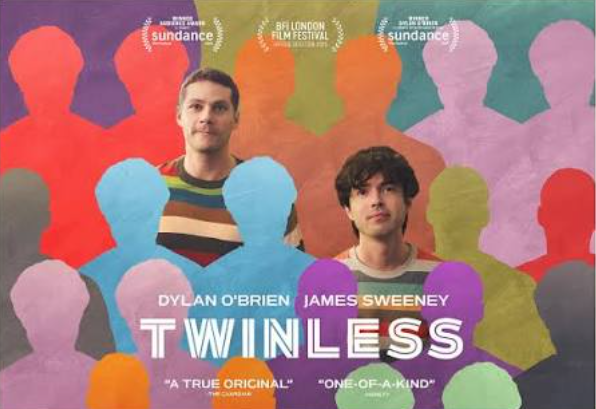
Most films about grief lean into predictable sentimentality, framing loss as a linear journey toward healing and closure. James Sweeney’s razor-sharp 2026 indie drama Twinless rejects every comforting cliché. Part dark comedy, part psychological character study, the film explores a uniquely isolating form of mourning: the pain of losing a twin, the one person who inherently understands your existence and completes your identity. Smart, awkward, emotionally raw and increasingly tense, Twinless uses its one-of-a-kind premise to dissect loneliness, codependency, and the dangerous ways people cling to connection when life feels unmoored. Anchored by a career-best dual performance from Dylan O’Brien, it is one of the most original, unflinching human dramas of the year.
The story opens with sudden, quiet tragedy. Roman, played by Dylan O’Brien, loses his charismatic, outgoing identical twin brother Rocky in a sudden car accident. The two brothers were polar opposites: Rocky was vibrant, socially fearless, openly queer and universally adored, while Roman is reserved, physically muscular but emotionally guarded, straight, and perpetually overshadowed by his twin’s magnetic personality. For his entire life, Roman existed as half of a pair, defined entirely by his bond with Rocky. After the funeral, he is left adrift, trapped in a strange, hollow state of “twinlessness”—a rare kind of grief few people can possibly comprehend. Encouraged by his mother, played subtly by Lauren Graham, Roman joins a specialized support group for people who have lost their twin siblings.
It is within this intimate grief circle that Roman meets Dennis, portrayed by writer-director James Sweeney himself. Dennis presents himself as another twinless survivor, a quiet, quick-witted man who understands the unique void left by a vanished other half. The two men form an immediate, intense bond. They share inside jokes, late-night conversations, and a quiet understanding that no one else in their lives can offer. For the first time since Rocky’s death, Roman feels less alone. Dennis fills the empty space left by his brother, mirroring Rocky’s energy, humor, and mannerisms in uncanny ways. Their friendship quickly spirals into an all-consuming codependency, a mutually therapeutic yet increasingly unstable attachment built entirely on shared trauma and loneliness.
Dylan O’Brien’s performance is the film’s undeniable backbone. Pulling double duty as both Roman and the deceased Rocky, he delivers two completely distinct, fully realized characters. As Roman, he embodies quiet grief, suppressed insecurity, and numbed isolation. His body language is closed off, his gaze distant, as if he is still waiting for his missing half to return. When brief flashbacks reveal the lively, fearless Rocky, O’Brien completely transforms—lighter, bolder, unapologetically present. The actor masterfully sells the eerie, almost supernatural feeling that Dennis is somehow channeling Rocky’s spirit, making Roman’s growing obsession feel sympathetic rather than strange. It is a nuanced, transformative performance that proves O’Brien’s range far beyond typical young-adult leading roles.
James Sweeney’s performance as Dennis is equally layered and deceptive. On the surface, Dennis is gentle, empathetic, and perfectly attuned to Roman’s pain. Beneath his calm exterior, however, simmering obsession and hidden trauma slowly surface. As the story progresses, Dennis grows increasingly possessive of Roman, jealous of any outside connection, and desperate to preserve their exclusive bond. Sweeney brilliantly balances dry comedic timing with quiet menace, crafting a character whose true intentions remain ambiguous until the film’s explosive third act. His direction complements his performance perfectly, favoring intimate close-ups, awkward pauses, and naturalistic dialogue that makes every interaction feel uncomfortably real.

Aisling Franciosi shines in a pivotal supporting role as Marcie, Dennis’s warm, perceptive coworker who begins dating Roman. Marcie serves as the film’s emotional grounding force, a stable, honest presence who notices the growing toxicity between the two grieving men. Her arrival disrupts their insulated bubble of grief, triggering Dennis’s hidden instability and forcing Roman to confront how unhealthy his new dependency has become. Marcie is never reduced to a plot device or a romantic obstacle; she is a fully realized character who challenges the film’s central dynamic, pushing both men toward long-overdue self-awareness.
What makes Twinless so compelling is its jaw-dropping central twist, which recontextualizes every prior scene. Without spoiling the full reveal, the film’s entire foundation of shared grief is revealed to be a carefully constructed illusion. Dennis is not twinless at all—he has spent years fixated on Rocky, and even inadvertently contributed to his fatal accident. His presence in the support group is not a coincidence, but a calculated obsession. This revelation transforms the film from a gentle meditation on grief into a haunting psychological thriller about fixation, guilt, and the dangerous urge to replace lost love. The twist never feels cheap or manipulative; instead, it retroactively deepens every subtle tension in the story.
Visually and tonally, the film strikes a perfect balance between indie warmth and creeping unease. Shot with soft, natural lighting and muted Pacific Northwest color tones, Portland’s gray, overcast atmosphere mirrors the characters’ melancholic inner worlds. Sweeney avoids dramatic cinematic flourishes, letting tension build through awkward silences, lingering stares, and unspoken subtext. The film’s dark humor feels organic and unforced, emerging from the absurdity of grief—the strange, uncomfortable, sometimes ridiculous ways people cope with unfathomable loss. It is funny and heartbreaking in equal measure, often within the same scene.
Thematically, Twinless explores profound questions about identity and belonging. What do you become when the person who defined your entire existence disappears? Is connection built on shared pain genuine, or merely a temporary coping mechanism? And when does healing attachment curdle into dangerous obsession? The film refuses easy answers. It acknowledges that grief does not always make people kinder or wiser; sometimes it makes them desperate, irrational, and willing to build false realities to avoid loneliness.
If the film has flaws, they lie in its restrained pacing and understated third-act resolution. Viewers expecting high drama or explosive confrontation may find the finale too quiet and introspective. Some secondary character arcs also feel underdeveloped, sacrificed to maintain the tight focus on Roman and Dennis’s volatile bond. Still, these limitations serve the film’s intimate, humanistic tone. Twinless is not designed for blockbuster spectacle; it is a small, quiet, deeply personal story about the messiness of human connection.
Final Verdict
Twinless is a mesmerizing, genre-blending indie triumph that balances dark comedy, psychological tension, and heartfelt grief drama with exceptional precision. Led by a career-defining dual performance from Dylan O’Brien and elevated by James Sweeney’s sharp, sensitive direction, it explores the unique agony of losing one’s other half and the dangerous lengths people go to feel seen again. Clever, uncomfortable, and quietly devastating, it is one of 2026’s most original and emotionally resonant films—a haunting reminder that the connections we build to heal ourselves can sometimes be the very thing that breaks us.