Film Review: Hokum (2026) – A Mesmerizing Blend of Irish Folk Horror and Psychological Grief
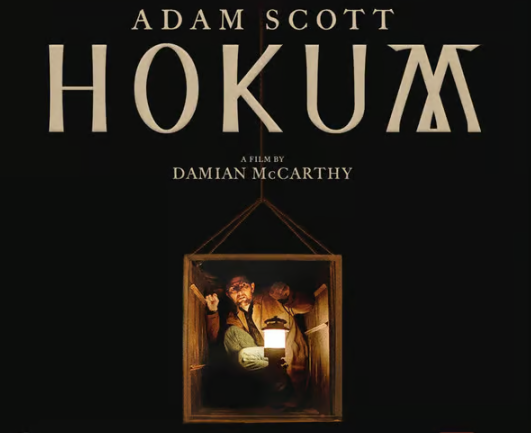
Modern horror cinema is saturated with generic jump-scare factories and formulaic ghost stories, making truly atmospheric, thematically layered genre films increasingly rare. 2026’s Hokum arrives as a refreshing and haunting exception. Masterfully directed by Damian McCarthy, this Irish folk horror thriller blurs the fragile line between supernatural curse and psychological breakdown, weaving ancient rural folklore, buried family trauma, and slow-burn mystery into one tightly crafted, endlessly unsettling experience. Far more than a typical haunted-house horror flick, Hokum uses its eerie rural setting and mythic framework to explore universal human pain: unresolved grief, lifelong guilt, and the invisible ghosts that cling to us long after loss. It is one of the most intelligent, atmospheric, and emotionally resonant horror films of the year.
The story centers on Ohm Bauman, a brooding, emotionally withdrawn horror novelist portrayed with tremendous subtlety by Adam Scott. Weary from years of writing dark, violent fiction and crippled by unresolved childhood trauma, Ohm travels to a remote corner of rural Ireland to scatter his late parents’ ashes. The quiet, isolated Bilberry Woods Hotel, nestled deep within fog-shrouded moorland, was once a place of fleeting happiness for his family. He hopes the peaceful countryside will grant him closure and inspire the final chapter of his bestselling literary trilogy. Instead, the remote manor becomes a prison of haunting visions, strange encounters, and creeping paranoia that dismantles his fragile mental stability.
From the moment Ohm checks in, the hotel feels subtly wrong. The staff behave strangely, the hallways echo with unaccountable sounds, and local villagers whisper ancient tales of the Cailleach—a mythic Irish witch spirit said to haunt the surrounding woods, trapping the sorrows and secrets of anyone who lingers too long. At first, Ohm dismisses these stories as mere rural superstition, nothing more than local hokum to entertain tourists. But as his stay stretches on, vivid nightmares, hallucinatory visions, and disjointed memories begin to overwhelm him. What starts as mild unease quickly escalates into full-blown terror, as the boundaries between past and present, reality and folklore, sanity and madness begin to dissolve entirely.
What elevates Hokum above standard folk horror fare is its brilliant dual-layered storytelling. McCarthy intentionally blurs supernatural horror and psychological distress, leaving audiences constantly questioning what is real and what exists only in Ohm’s fractured mind. A pivotal, understated plot twist reveals that Ohm’s drink was spiked with psychoactive mushrooms upon arrival, amplifying his repressed trauma and allowing his subconscious to manifest in terrifying, otherworldly imagery. The haunting figures, ghostly whispers, and cursed visions are not purely supernatural phenomena—they are externalized manifestations of his lifelong grief over his mother’s tragic death and his resentment toward his abusive, alcoholic father.
Adam Scott delivers a career-high, awards-worthy performance as Ohm Bauman. Shedding his usual dry, comedic screen persona entirely, he embodies a man hollowed out by decades of repressed pain. Scott’s performance is masterfully restrained; he conveys unraveling sanity not through over-the-top panic or screaming fits, but through trembling microexpressions, vacant stares, hesitant speech, and slow, exhausted movements. Every small shift in his demeanor reveals a mind quietly breaking under the weight of unprocessed trauma. The actor perfectly captures the loneliness of a man who has spent his entire career writing about darkness, only to realize he has never confronted the darkness living inside himself.
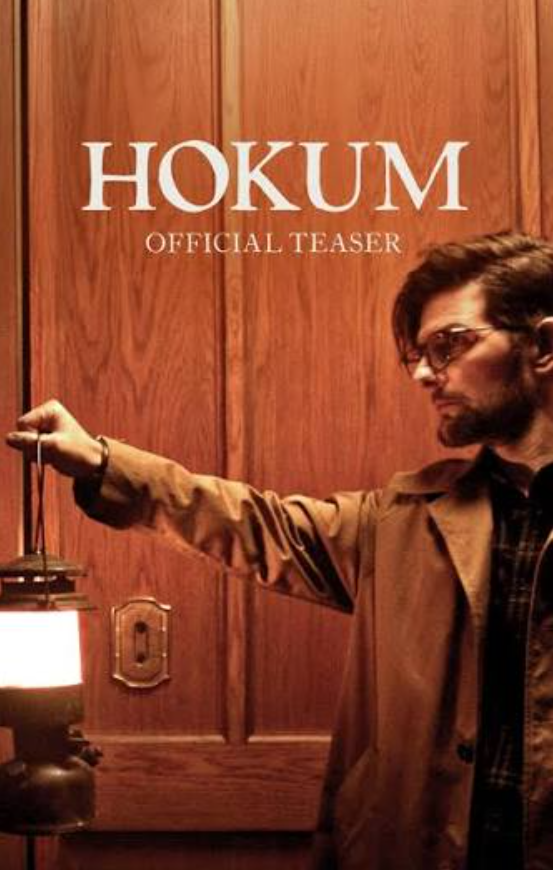
The supporting cast brings rich, unsettling texture to the film’s tense, claustrophobic world. Florence Ordesh shines as Fiona, a warm yet mysterious hotel barmaid whose quiet kindness anchors Ohm amid his growing chaos, while slowly revealing hidden secrets of the hotel’s violent history. Moe Dunford delivers a chilling turn as Mal, the reserved, unnervingly calm desk clerk whose polite demeanor masks buried malice and a long-buried crime tied to the hotel’s cursed legacy. Kerry Condon, in a brief but impactful role, embodies local folklore wisdom, warning Ohm that rural Irish superstitions are often far more truth than fiction. Every supporting character feels deliberately ambiguous, their motives always just out of reach, amplifying the film’s pervasive sense of unease and distrust.
Visually and tonally, Hokum is absolutely masterful. McCarthy crafts a thick, suffocating atmosphere of dread through deliberate, patient filmmaking. The fog-choked Irish moors, dimly lit hotel corridors, creaking wooden floors, and shadow-filled rooms create constant low-grade tension. The cinematography favors muted earthy tones of gray, moss green, and damp brown, mirroring Ohm’s bleak emotional state. Unlike modern horror films that rely on sudden loud jump scares, Hokum builds dread slowly and methodically, letting tension simmer in every quiet pause, every empty hallway, and every ambiguous glance. The sound design is equally meticulous: distant wind, faint whispers, floorboard creaks, and near-silence combine to create an immersive, unsettling experience that lingers long after each scene ends.
Thematically, the film offers a profound meditation on grief, storytelling, and self-deception. Its title, Hokum, perfectly encapsulates its core message: we often dismiss pain, superstition, and buried trauma as meaningless nonsense, mere hokum, until they consume us entirely. Ohm spends years fictionalizing darkness in his books to avoid confronting his real-life suffering. He treats his trauma as distant material, not personal truth, and the hotel’s haunting forces him to stop running. The film brilliantly argues that folklore and ghost stories are never just tales—they are collective vessels for unresolved pain, generational sorrow, and human fear. The Cailleach witch legend is less a monster and more a metaphor for grief itself: ancient, relentless, and impossible to outrun.
If the film has minor flaws, they stem from its uncompromising slow-burn pacing. Viewers expecting fast-paced horror, constant scares, or explosive third-act payoffs may find its methodical rhythm too subdued. The ambiguous finale, while thematically perfect, will also divide audiences, as it refuses to offer clean closure or easy answers. Some viewers may crave more explicit resolution regarding the hotel’s history and supernatural rules. Yet these deliberate creative choices are precisely what make Hokum so effective. McCarthy prioritizes psychological depth over cheap thrills, trusting his audience to sit with discomfort and unpack layered emotional horror.
Hokum distinguishes itself as one of the most thoughtful horror films of recent years. It is simultaneously a gripping folk-horror mystery, a compelling character study, and a poignant story of healing. It proves that the scariest stories are not about supernatural monsters, but about the pain we bury, the truths we ignore, and the trauma we carry across decades. In a genre oversaturated with hollow spectacle, McCarthy’s quiet, atmospheric, emotionally rich thriller feels refreshingly original and deeply human.
Final Verdict
Hokum is a haunting, exquisitely crafted folk horror masterpiece that blends Irish supernatural tradition with raw psychological realism. Led by an extraordinary central performance from Adam Scott, Damian McCarthy’s slow-burn thriller trades jump-scare spectacle for lingering dread and emotional depth. It is a film about ghosts both real and imagined, the danger of dismissing sorrow as superstition, and the agony of a lifetime spent running from yourself. Atmospheric, intelligent, and quietly devastating, Hokum is 2026’s most unforgettable horror gem—a layered, resonant work that redefines what modern folk horror can achieve.
Leave a Reply