Film Review: Black Bag (2025) – Steven Soderbergh’s Sharp, Wordly Spy Thriller About Love Under Suspicion
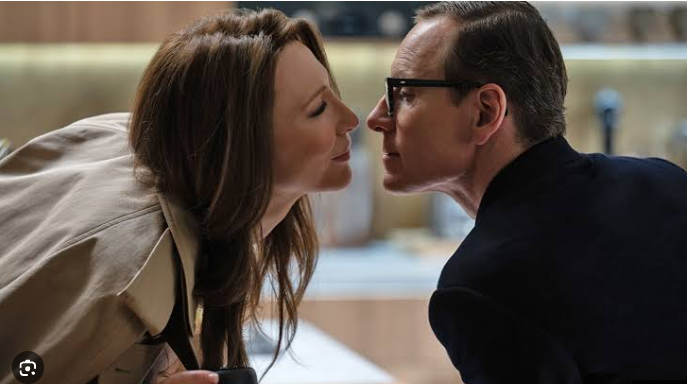
In an era where modern spy thrillers rely heavily on explosive chase sequences, high-tech gadgetry and global action set pieces, Steven Soderbergh’s Black Bag arrives as a refreshingly restrained, razor-sharp alternative. Released in 2025, this sleek, compact espionage drama trades blockbuster spectacle for psychological tension, quiet manipulation and deeply layered human drama. True to Soderbergh’s signature style, the film is minimalist, intelligent and emotionally ambiguous, using the framework of a government leak investigation to dissect trust, marriage and loyalty in a world where no one and nothing is ever fully transparent. Short, tight and endlessly rewatchable,Black Bag proves that the best spy stories are not about saving the world, but about uncovering the hidden lies lurking closest to home.
Set within the sleek, sterile offices of Britain’s national intelligence community, the story centers on George and Kathryn Woodhouse, two elite intelligence operatives played masterfully by Michael Fassbender and Cate Blanchett. Publicly, they are the agency’s most admired couple, renowned for their professionalism, discretion and rare stable partnership in a field defined by deception and betrayal. Colleagues even quietly mock their relationship as “flagrant monogamy”, a rare anomaly in a world of fleeting alliances and calculated compromises. For years, their marriage has served as their one reliable constant, a private safe space separate from their high-stakes professional lives.
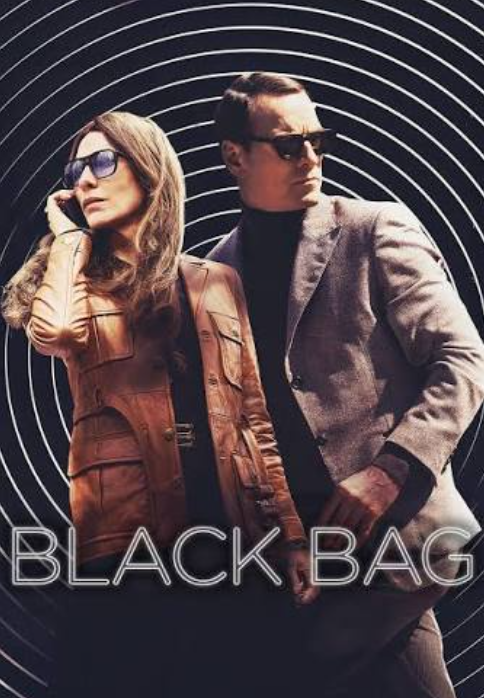
Their carefully ordered life collapses overnight when a critical security breach rocks the agency. A top-secret surveillance program codenamed Severus has been leaked to foreign adversaries, threatening national security. Tasked with identifying the mole, George is handed a shortlist of five internal suspects. To his quiet horror, the list includes his own wife, Kathryn. What follows is not a typical manhunt, but a tense, methodical psychological chess game that blurs every line between duty and love, suspicion and devotion, professional obligation and personal survival.
Rather than resorting to field operations or aggressive interrogations, George designs an intricate, understated trap. He assembles all five suspects for an intimate dinner party, secretly administering a mild truth serum into every guest’s wine except Kathryn’s. What unfolds over the evening is the film’s gripping centerpiece: a masterclass in slow-burn tension. Under the influence, colleagues reveal hidden jealousies, secret rivalries and concealed motives, while Kathryn remains sharp, guarded and unnervingly composed. As George observes every micro-expression, every hesitant answer and every subtle misdirection, he is forced to confront a terrifying question: has the person he trusts most in the world been lying to him all along?
The greatest strength of Black Bag is its refusal to simplify its central conflict. Soderbergh never frames the story as a basic “good vs evil” spy narrative. Instead, he explores how easily patriotism, self-preservation and personal loyalty can collide in high-pressure intelligence work. Each suspect carries believable motives and hidden flaws, making every twist feel earned and organic. The film avoids cheap plot shocks, relying instead on gradual, incremental reveals that chip away at the Woodhouses’ perfect marriage facade.
Fassbender and Blanchett deliver remarkably restrained, layered performances that carry the entire film. Fassbender embodies George as the agency’s “human polygraph”, a man trained to detect deception in others yet suddenly powerless to read his own wife. His performance is quiet but intensely internalized; every flicker of doubt, suppressed anger and quiet grief is visible beneath his calm, collected exterior. Blanchett matches him perfectly as Kathryn, a woman of extraordinary poise and intelligence whose true intentions remain tantalizingly out of reach. She shifts between loving spouse and guarded operative so seamlessly that even the audience struggles to determine where her loyalty truly lies.

The supporting cast brings rich texture to the tight-knit story. Pierce Brosnan excels as George’s calculating handler Meacham, a veteran agent who views relationships as operational weaknesses rather than personal strengths. Naomie Harris and Rege-Jean Page shine as a fellow operative couple whose volatile dynamic contrasts sharply with the Woodhouses’ icy restraint, while Marisa Abela delivers a compelling turn as a young, anxious analyst caught in the center of the conspiracy. Every character serves a purpose in Soderbergh’s tightly constructed puzzle, with no wasted roles or unnecessary subplots.
Visually, Black Bag is classic Soderbergh: clean, precise and atmospheric. The color palette is cool and desaturated, dominated by grays, deep blues and muted blacks, mirroring the intelligence world’s emotional detachment and moral ambiguity. The camera work is steady and unobtrusive, prioritizing subtle character moments over flashy cinematography. Soderbergh uses confined interiors—dimly lit offices, minimalist apartments and tense dinner tables—to amplify claustrophobia, creating a sense that the characters are constantly being observed, even in their most private moments. The sound design is equally restrained, with quiet ambient hums and sharp, selective silence building constant low-grade unease.
What makes the film thematically rich is its exploration of marriage as both sanctuary and battlefield. Black Bag asks whether total trust is possible in a relationship built on secrecy and deception. Can two professional liars ever truly know each other? When duty conflicts with love, which side wins? As the investigation deepens, the film peels back layers of marital tension that existed long before the security breach. The leak is merely the catalyst that exposes underlying cracks in their seemingly perfect partnership—unspoken doubts, hidden resentments and compromises they have buried for years.
If the film has any shortcomings, they stem from its extreme brevity. At only 93 minutes, Black Bag is ruthlessly efficient, leaving little room for extensive character backstories or elaborate world-building. Some viewers may wish for deeper exploration of the film’s political context or more resolution for its supporting characters. Additionally, the subtle, dialogue-driven tension may feel too slow or understated for audiences expecting traditional spy-movie thrills. Yet these limitations are precisely what make the film so effective. Soderbergh’s tight, disciplined direction ensures every scene advances the plot, deepens the characters or heightens the tension, resulting in a lean, focused thriller with zero filler.
Black Bag succeeds brilliantly as a modern spy drama because it understands that real espionage is less about gunfights and more about observation, manipulation and quiet betrayal. It is a film about how easily trust can erode, how secrets can rot relationships from the inside, and how the people we love the most are the only ones capable of truly destroying us. By blending sophisticated psychological drama with tight, intelligent storytelling, Soderbergh redefines what a spy thriller can be: not a story about global danger, but about intimate human fragility.
Final Verdict
Black Bag is a masterfully crafted, intellectually taut spy thriller that prioritizes psychology over spectacle. Led by electrifying, understated performances from Michael Fassbender and Cate Blanchett, Steven Soderbergh’s 2025 gem is a sleek, sophisticated exploration of trust, marriage and deception in the shadow of intelligence work. Compact, clever and consistently suspenseful, it avoids every spy-movie cliché to deliver something far more layered and memorable: a tense human drama disguised as an espionage puzzle. For viewers who prefer sharp writing and emotional complexity over mindless action, Black Bag stands as one of the most intelligent and satisfying thrillers of the year.
Leave a Reply