Film Review: Warfare (2025) – A Relentless, Real-Time Descent Into the Chaos of Modern Combat
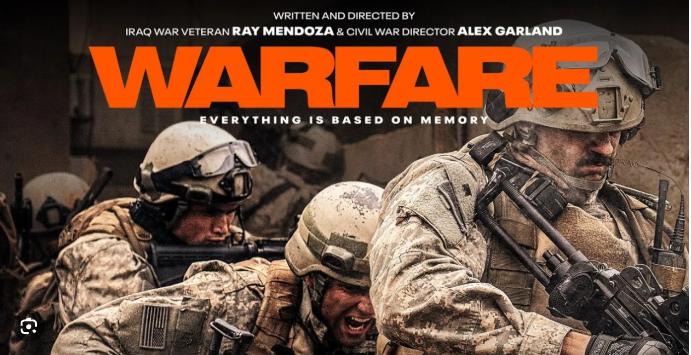
Most war films filter combat through narrative structure, heroic framing, or political commentary. They give audiences distance, context, and closure. A24’s 2025 thrillerWarfare rejects every single one of those comforts. Directed by genre innovator Alex Garland and former Navy SEAL Ray Mendoza, this brutally immersive real-time war drama strips away Hollywood patriotism, dramatic exposition, and cinematic gloss to deliver one of the most authentic, anxiety-inducing portrayals of modern combat ever put on screen. Based entirely on firsthand veteran testimonies and lived operational experience, the film does not tell you what war means. It simply puts you inside the chaos, confusion, and terror of a single military mission that spirals irreversibly out of control.
Set in 2006 during the height of the Iraq War, the story follows a small, tight-knit team of Navy SEALs deployed on a routine surveillance overwatch mission in Ramadi, one of the country’s most volatile insurgent strongholds. The operation begins calmly and methodically: the team positions itself in an abandoned urban building, observing enemy movement, relaying coordinates, and waiting for further orders. There are no grand speeches, no dramatic entrances, and no foreshadowed heroics. The soldiers behave like real soldiers—quiet, focused, exhausted, and quietly humorous in the dull downtime between high-stakes moments. For the first twenty minutes, Warfare builds tension not through loud action, but through stillness, letting viewers settle into the monotonous, watchful rhythm of military deployment.
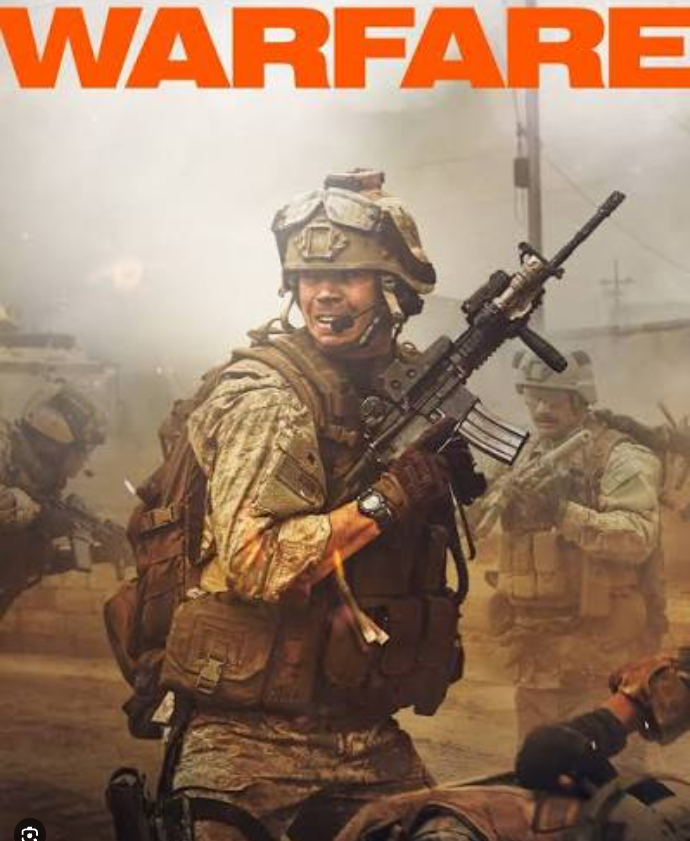
Disaster strikes without warning. A sudden, coordinated insurgent ambush traps the entire team inside their overwatch position. Cut off from immediate backup, surrounded by enemy fighters, and pinned down by relentless gunfire, the mission collapses from routine surveillance into a desperate fight for survival. What follows is a strict real-time sequence of pure, unfiltered combat. Every minute of screen time equals one minute of real-life chaos. There are no time jumps, no convenient reprieves, and no cinematic shortcuts. The audience experiences every panicked radio call, every split-second decision, every missed shot, and every devastating casualty exactly as the soldiers experience it—disorienting, chaotic, and emotionally draining.
The greatest strength ofWarfare is its radical commitment to realism. Co-director Ray Mendoza’s background as a combat veteran ensures that every detail feels lived-in and authentic. The soldiers’ body language, communication styles, tactical errors, and understated camaraderie avoid the clichéd machismo of typical military blockbusters. These men are not superhuman warriors. They are ordinary young people operating under extraordinary pressure. They argue, hesitate, second-guess themselves, and crack dark jokes to cope with fear. The film never glorifies violence or frames war as a stage for glory. Instead, it depicts combat as a messy, disorganized series of mistakes, luck, and split-second choices that determine who lives and who dies.
The ensemble cast delivers grounded, understated performances that prioritize authenticity over dramatic flair. Cosmo Jarvis leads the team with quiet authority, portraying a level-headed squad leader whose calm exterior slowly crumbles under the weight of responsibility. Joseph Quinn shines as a sharp, anxious team member whose quick thinking keeps the unit alive during critical failures, while Kit Harington offers a restrained turn as a seasoned operator worn down by repeated deployment cycles. Rather than relying on star power, the cast blends seamlessly into the unit dynamic, creating the convincing illusion of a real military team bound by trust, stress, and shared trauma. There are no standalone hero moments; every survival win is collective, every loss communal.
Visually and sonically, Warfare is masterfully crafted to maximize immersion. Garland’s signature clinical, tight-framed cinematography traps viewers within the confined, crumbling building, using cramped framing and naturalistic lighting to amplify claustrophobia. The camera rarely pulls back for wide establishing shots, denying audiences the “big picture” view that typical war films provide. Just like the soldiers on the ground, viewers only see fragmented, partial information, which amplifies the constant sense of uncertainty. The sound design is equally meticulous and jarring: sharp, deafening gunfire, muffled radio static, collapsing concrete, and heavy breathing combine to create an overwhelming auditory environment that triggers genuine tension.
What separates Warfare from other modern war films is its complete lack of political agenda. The movie never debates whether the Iraq War was justified or misguided. It avoids talking heads, strategic exposition, and nationalistic rhetoric. Instead, it narrows its focus entirely to the human experience of combat. Garland and Mendoza understand that from a soldier’s perspective, war is rarely about ideology or politics. It is about staying alive, protecting your teammates, and managing terror in real time. This narrow, intimate scope makes the film’s commentary far more powerful than any overt political statement. By stripping away context, Warfare exposes the raw, meaningless chaos of modern urban combat.
The film also offers a poignant meditation on brotherhood under pressure. In moments of extreme crisis, personal differences vanish. Rank, personality conflicts, and individual egos no longer matter. What remains is pure dependence: every soldier’s life relies entirely on the competence and reliability of the person beside them. The quiet bonds formed in terror become the film’s true emotional core. The soldiers’ grief over fallen teammates is not melodramatic or overacted; it is numb, exhausted, and visceral, captured in shaky breathing, delayed reactions, and silent stares. This subtle emotional depth elevates Warfare from a technical thriller to a deeply human story about sacrifice and survival.
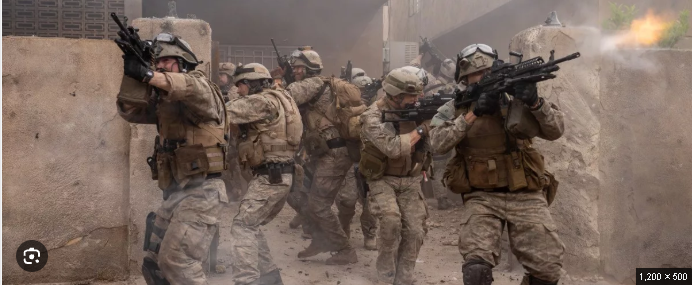
If the film has limitations, they stem from its narrow focus. Viewers expecting sweeping battle sequences, strategic drama, or character backstories will find the experience restrictive. The real-time structure, while brilliantly immersive, also leaves little room for thematic exploration beyond the immediate moment. Some viewers may find the relentless tension exhausting, as the film offers almost no reprieve from start to finish. Additionally, the intentional lack of context can make minor tactical moments difficult to follow for viewers unfamiliar with military operations. Still, these shortcomings are deliberate creative choices that serve the film’s uncompromising vision.
Warfare ultimately succeeds because it redefines what a war thriller can be. It does not entertain through spectacle. It immerses through authenticity. In a genre saturated with heroic, polished, and often sanitized depictions of combat, Garland and Mendoza’s collaboration is brutally honest. It reminds audiences that war is not defined by victory speeches or tactical triumphs, but by fear, confusion, loss, and random chance. It is a film that does not just depict suffering—it makes you understand it.
Final Verdict
Warfare is one of the most intense, authentic, and formally innovative war films of recent years. Through its strict real-time structure, unflinching realism, and grounded ensemble performances, Alex Garland and Ray Mendoza craft a pure, unfiltered portrait of modern combat that prioritizes human truth over spectacle or politics. It is exhausting, challenging, and occasionally difficult to watch, yet undeniably powerful. For viewers seeking mature, intelligent, and immersive genre filmmaking, Warfare is a masterclass in restrained, high-tension storytelling—a modern war classic that lingers in the mind long after the credits end.
Leave a Reply