Film Review: The Odyssey (2026) – Christopher Nolan’s Grounded Epic of Trauma, Longing and the Cost of Heroism
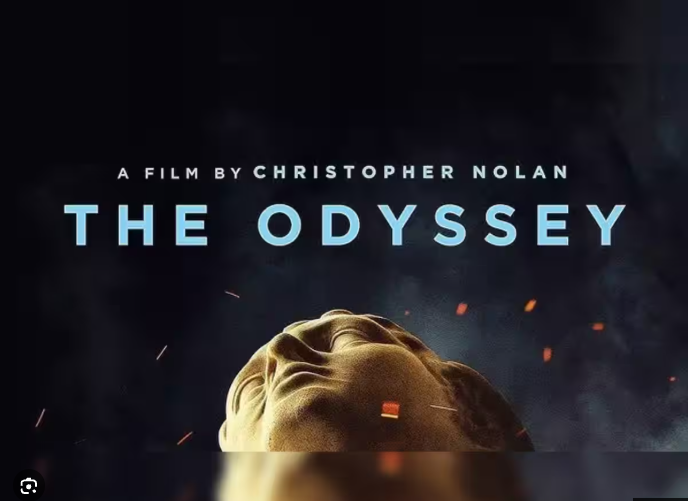
After the sweeping historical weight ofOppenheimer, Christopher Nolan turns to one of Western civilization’s oldest surviving works: Homer’s The Odyssey. Shot entirely on IMAX 70mm film with practical‑first production values, this 2026 epic re‑imagines the myth of Odysseus not as a colourful fantasy filled with whimsical gods, but as a brutal meditation on war trauma, fractured identity, and the nearly impossible labour of coming home. Nolan strips away much of the poem’s magical whimsy, grounding monsters, curses and divine interference in human fear, guilt and survivor’s fatigue. The result is a technically staggering, emotionally uneven blockbuster: a grand theatrical event that asks modern audiences to confront what heroism truly costs, three thousand years after Homer first told the tale.
The story follows Odysseus, King of Ithaca, portrayed with brooding restraint by Matt Damon. A clever, proud warrior famous for devising the Trojan Horse, he leaves behind his wife Penelope and infant son Telemachus to fight in the decade‑long Trojan War. When the conflict ends in brutal victory, he sets sail for home, only to anger unseen forces. What unfolds is ten years of wandering: cyclops caves, bewitching sorceresses, deadly sirens, storm‑wrecked ships and endless loss of his crew. Back on Ithaca, Penelope (Anne Hathaway) struggles to hold their kingdom together against greedy suitors led by the vicious Antinous (Robert Pattinson), while the young Telemachus (Tom Holland) matures into a man desperate to learn the fate of his missing father. Nolan keeps the poem’s non‑linear structure, opening mid‑journey and weaving flashbacks of Troy into Odysseus’s tormented present.
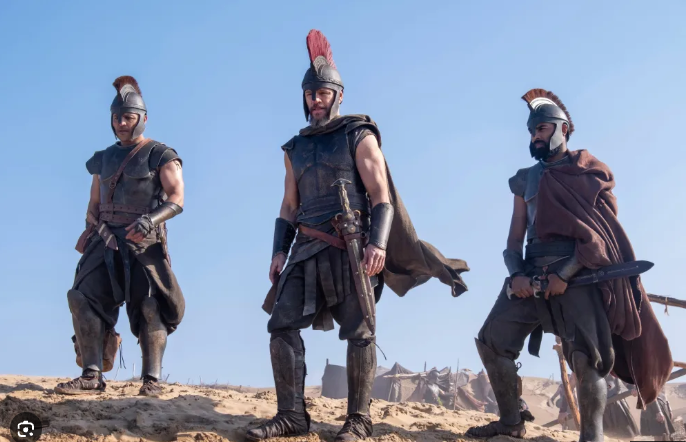
Matt Damon delivers one of the most physically and emotionally demanding performances of his career. This Odysseus is no flawless mythic champion. Early scenes show his arrogance and sharp cunning; as his voyage drags on, he shrinks into exhaustion, grief and quiet shame. Damon conveys the slow erosion of a warrior’s soul: confidence gives way to nightmares, impulsive pride to helpless resignation. Many of the film’s most powerful moments have little dialogue. They live in his hollow stares, his trembling hands, and his quiet disbelief as he realises he may never see his family again. Anne Hathaway’s Penelope also avoids classic damsel tropes. She is a sharp, politically astute ruler whose pain comes not only from loneliness, but from being erased while waiting for a husband the world assumes is dead. Their rare shared scenes crackle with unspoken years of separation and hurt.
Nolan’s greatest creative choice is how he handles mythology. Gods do not descend openly from Mount Olympus. Divine will manifests through storms, bad fortune, inner voices and psychological torment. Monsters are given tangible, physical form through massive practical puppetry, prosthetics and forced‑perspective cinematography rather than over‑reliance on CGI. The Cyclops sequence is terrifying, claustrophobic and visceral; Circe’s island, played eerily by Samantha Morton, feels less like magical wonderland and more like a place of psychological entrapment. Even the Sirens are re‑framed as a hallucination of guilt and regret, preying on the crew’s buried memories of the violence they committed at Troy. Nolan’s approach makes the myth feel real, yet it also removes some of the ancient poem’s strange, dream‑like wonder. The supernatural becomes metaphor, which sharpens the human drama yet softens the poem’s wild otherworldly atmosphere.
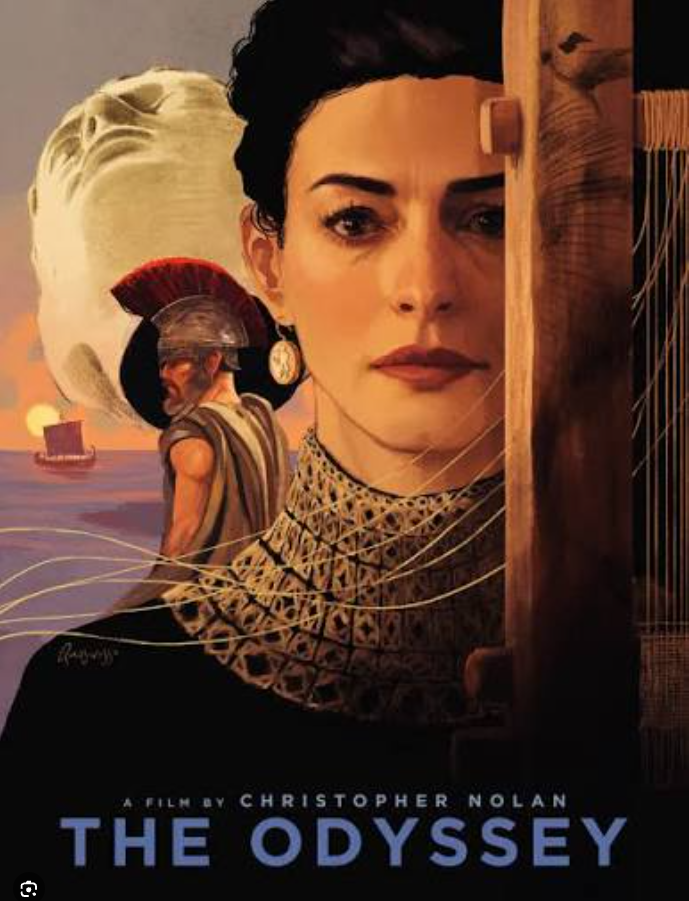
Visually, The Odyssey is spectacular. Every frame shot for large‑format theatrical presentation, with sweeping coastal landscapes, sun‑baked bronze‑age villages and dark, shadow‑filled caves. The massive physical build of the Trojan Horse, built as a full‑size prop on‑location, creates genuine awe, reminding viewers of Nolan’s commitment to in‑camera realism. Wide IMAX shots capture vast oceans and mountain ranges, while tight close‑ups lock onto faces filled with weariness and fear. Ludwig Göransson’s score mixes deep, rumbling percussion and mournful string work, though the music sometimes recedes when emotional beats would benefit from stronger musical emphasis. This is cinema built for huge theatre screens; much of its power will inevitably diminish on home viewing.
The film’s central theme is homecoming as psychological challenge, not just physical travel. War breaks people in ways no journey can fully repair. Odysseus wins the war, but victory is a curse. He survives every monster and storm, yet fears that the man returning to Ithaca will no longer be the husband and father Penelope once knew. The famous scene with his old dog Argos carries enormous quiet weight: the creature recognises its long‑lost master, then dies, as if the last witness to his old life fades away. The story asks: can a person who has seen so much killing ever truly belong back in peace? Can family love survive decades of absence and trauma? These questions give the ancient story urgent modern relevance, turning an epic poem into a story about veterans, memory and broken relationships.
For all its grand strengths, The Odyssey has clear weaknesses. At 172 minutes, its episodic structure occasionally sags. Some supporting characters lack meaningful depth; many members of Odysseus’s crew blend together, and several mythic figures receive only brief, passing screen‑time. Some of the dialogue leans toward modern phrasing, which can briefly pull audiences out of the ancient setting. Because Nolan prioritises psychological realism, some of the poem’s strangest, most surreal moments are trimmed or simplified. Viewers hoping for bright, colourful mythological adventure may find the tone consistently sombre and heavy‑hearted. This is not a swashbuckling fantasy; it is a long, grim story of endurance and sorrow.
Even with these flaws, Nolan succeeds in one vital goal: he makes Homer accessible for modern mainstream audiences without dumbing down its core questions. The Odyssey is not simply about a man fighting monsters to get back to his family. It explores how glory fades, how cleverness cannot outrun fate, and how the songs we tell about heroes often hide the pain the heroes carry. Victory, the film reminds us, does not erase suffering. Fame and clever deeds become stories, but the personal cost remains private and permanent.
Final Verdict
The Odyssey is a monumental, technically masterful epic that re‑interprets Homer for 21st‑century eyes. Anchored by Matt Damon’s layered central performance, Christopher Nolan trades colourful myth‑making for grounded human trauma, turning a legendary voyage into a moving study of war, memory and the agony of homecoming. It is long, sombre, and occasionally uneven, yet filled with unforgettable theatrical moments. It will satisfy viewers hungry for serious, large‑scale event cinema, even as it challenges them to look past heroic legend and see the broken mortal underneath. An ambitious, thought‑provoking piece of blockbuster filmmaking that proves ancient stories still hold powerful truths for our present world.
Leave a Reply