Review: One Battle After Another – Paul Thomas Anderson’s Messy, Haunting Vision of Lost Revolution
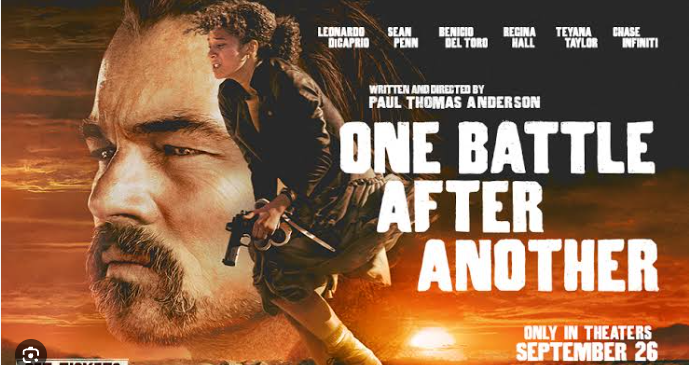
Paul Thomas Anderson has always been one of Hollywood’s most uncompromising storytellers. Unlike mainstream filmmakers who prioritize tidy plots and crowd-pleasing payoffs, he builds films around unspoken tension, fractured identities, and the quiet rot lurking beneath American society. With One Battle After Another, his highly anticipated 2025 feature loosely adapted from Thomas Pynchon’s notoriously unfilmable novel Vineland, Anderson delivers a sprawling, genre-bending epic that blends political paranoia, dark satire, gritty thriller action, and intimate family drama. It is a messy, ambitious, and deeply haunting film—one that refuses easy answers, rejects nostalgic glorification, and dissects the long-term cost of idealism, rebellion, and generational trauma.
Set in a hazy, near-future Northern California, the story unfolds in a world where counterculture revolution has long faded into distant memory, replaced by rigid state control and quiet societal decay. The narrative centers on Bob Ferguson, a weathered, reclusive man portrayed brilliantly by Leonardo DiCaprio. Decades earlier, Bob was known as Pat, a fiery young radical and explosives specialist tied to French 75, a militant activist group fighting against systemic state oppression and anti-immigrant injustice. In his youth, he was reckless, passionate, and unafraid to burn bridges for the cause, alongside his fearless lover and group leader Perfidia Beverly Hills (Teyana Taylor).
The pair once dreamed of upending a corrupt system and building a fairer world, but their revolution was violently crushed. Led by the cold, authoritarian Colonel Steven Lockjaw (Sean Penn), state forces dismantled their collective, scattered its members, and erased their movement from public memory. Perfidia mysteriously disappeared, and a terrified Pat abandoned his old identity entirely. He went underground, renamed himself Bob, and spent sixteen years living off-grid in isolated rural California, devoting his entire life to protecting his teenage daughter Willa (Chase Infiniti).
For years, their quiet, sheltered life offers a fragile kind of peace. Bob is a broken man—burnt out by trauma, numbed by years of self-medication, and trapped in a constant state of low-grade paranoia. He survives day by day, desperate to shield Willa from the violence and chaos that defined his youth. Willa, by contrast, is grounded, sharp, and utterly disconnected from her father’s radical past. To her, 1960s and 70s counterculture revolution is nothing but ancient history. She craves normalcy, friendship, and freedom from her father’s overprotective, anxious isolation. The generational divide between them forms the film’s emotional core, creating a tender, realistic dynamic that grounds its sweeping political themes.
This fragile peace shatters violently when Colonel Lockjaw resurfaces. Decades after crushing the rebellion, he remains obsessed with erasing every last trace of French 75—and his personal fixation on Perfidia and her family drives him to hunt down Bob and Willa. What follows is not a simple action-driven manhunt, but a slow-burn, psychologically charged thriller. Bob is forced to confront every mistake of his youth, every buried secret, and the painful truth that you can never truly outrun your past. His fight is no longer for political revolution, but for the only family he has left.
DiCaprio’s performance is one of the most restrained, transformative works of his career. Abandoning the charismatic, commanding energy of his typical leading roles, he embodies Bob as a man worn thin by regret and survival. There is no heroism in his portrayal—only exhaustion, vulnerability, and quiet desperation. He stumbles through daily life, fumbles with old revolutionary codes, and rambles through half-forgotten slogans, laying bare how trauma erodes identity over decades. His chemistry with newcomer Chase Infiniti is phenomenal. Their father-daughter bond feels authentic and unscripted: Willa alternates between frustration with her father’s paranoia and profound empathy for his hidden pain, while Bob learns to let go of his fear and trust the young woman his daughter has become.
Sean Penn’s antagonist Lockjaw is equally mesmerizing. Avoiding over-the-top villainy, Penn plays the colonel as a chillingly calm, methodical tyrant. His cruelty is not theatrical, but bureaucratic and personal—a perfect reflection of systemic oppression that hides behind law and order. Teyana Taylor shines in her limited screen time as Perfidia, crafting a complex, unidealized radical. She is brave and passionate, yet flawed and self-aware, willing to sacrifice personal happiness for collective change. The film never judges her choices, instead honoring the complicated humanity of those who dedicate their lives to fighting broken systems.
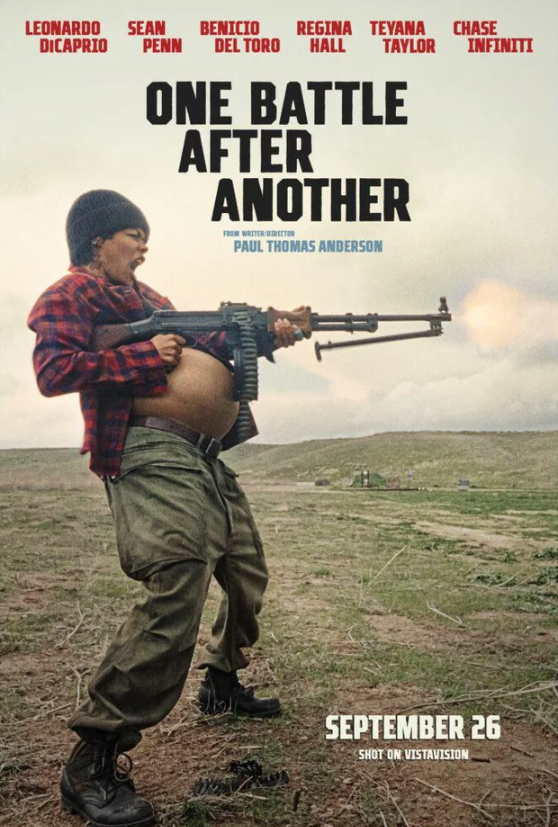
Visually, One Battle After Another is classic Paul Thomas Anderson craftsmanship. Shot partially on 70mm film, every frame balances breathtaking natural beauty with underlying unease. The sun-drenched California hills and empty coastal highways look serene, yet they carry an eerie emptiness, visualizing a society that has abandoned progress and empathy. Cinematographer Michael Bauman alternates between sweeping, open landscape shots and tight, claustrophobic close-ups, amplifying the film’s shifting tones of freedom and confinement. Jonny Greenwood’s haunting score anchors every scene, blending tense, percussive thriller beats with soft, melancholic melodies for the intimate father-daughter moments.
Anderson’s action sequences are deliberately unglamorous. There are no heroic one-liners or stylized fight scenes. Violence here is messy, painful, and disorienting, emphasizing that revolution and state repression are endless, brutal cycles—one battle after another, with no true victory. The film’s greatest strength is its refusal to romanticize the counterculture movement. It acknowledges the idealism of 70s radicals, but also exposes their ego-driven mistakes, internal conflicts, and personal sacrifices. Revolution, Anderson argues, does not just change systems—it destroys lives, fractures families, and leaves permanent scars for future generations.
If the film has flaws, they stem from its sheer ambition. Clocking in at 162 minutes, it juggles political satire, conspiracy thriller tension, generational drama, and cultural commentary, leaving a few secondary characters and narrative threads underdeveloped. Some supporting radicals played by Regina Hall and Benicio del Toro are compelling but underused, and the near-future world-building feels intentionally sparse. Anderson prioritizes human emotion over detailed sci-fi worldbuilding, which may frustrate viewers seeking a tightly plotted thriller. The middle act also meanders at times, shifting tones abruptly between quiet domestic scenes and chaotic chase sequences.
Yet these imperfections are part of the film’s power. One Battle After Another is not designed to be easy entertainment. It is a provocative, meditative examination of idealism’s slow death in modern America. It asks timeless, urgent questions: What do we owe to our beliefs? What do we sacrifice for progress? And how do we reconcile the passionate choices of our youth with the quiet responsibilities of parenthood and adulthood?
In an era of formulaic blockbusters and safe, crowd-pleasing dramas, Anderson’s unapologetically bold storytelling feels refreshingly vital. This is a film that lingers in your mind long after the credits roll, rewarding repeat viewings with hidden details, layered dialogue, and subtle visual symbolism. It will inevitably split audiences: casual viewers may find its pacing slow and themes dense, while cinephiles will celebrate its ambition, depth, and emotional honesty.
Final Verdict
One Battle After Another is a sprawling, thought-provoking masterpiece of modern adult cinema. Fueled by career-best performances from Leonardo DiCaprio and a stellar ensemble cast, Paul Thomas Anderson’s latest work dissects revolution, regret, and generational legacy with unflinching honesty. It is overlong, occasionally uneven, and intentionally challenging—but it is never dull or hollow. A rare political drama that prioritizes humanity over spectacle, it cements Anderson’s status as one of the most essential filmmakers of his generation. Bold, messy, and endlessly resonant, One Battle After Another is one of 2025’s most ambitious and unforgettable films.
Leave a Reply